Short answer
ATP testing is built to detect organic residue from living cells, so it cannot tell you whether CS, CN or OC tear gas residue remains on a surface. It may help only on the parts of a tear gas job that also involve blood, food spoilage or other biological soil. For the chemical agent itself, rely on a methodical cleaning process, a symptom-based walkthrough and, where justified, chemical-specific sampling.
Why a biology test shows up on chemical cleanup quotes
ATP luminometers became common in food service, healthcare and general restoration because they give an instant number after cleaning. Some remediation companies bring the same devices to every job they do, and the readings can find their way into tear gas proposals and closeout reports.
That creates confusion. You may see a line item for ATP verification on a quote for a home that was hit with CS canisters during a standoff, and reasonably assume it confirms the tear gas is gone. It does not. Understanding why helps you evaluate proposals and ask better questions.
None of this means a company offering ATP is dishonest. It may simply be using a tool it trusts from other work. Your job is to understand which question each test answers so you do not pay for reassurance that does not apply to your problem.
What does an ATP reading respond to?
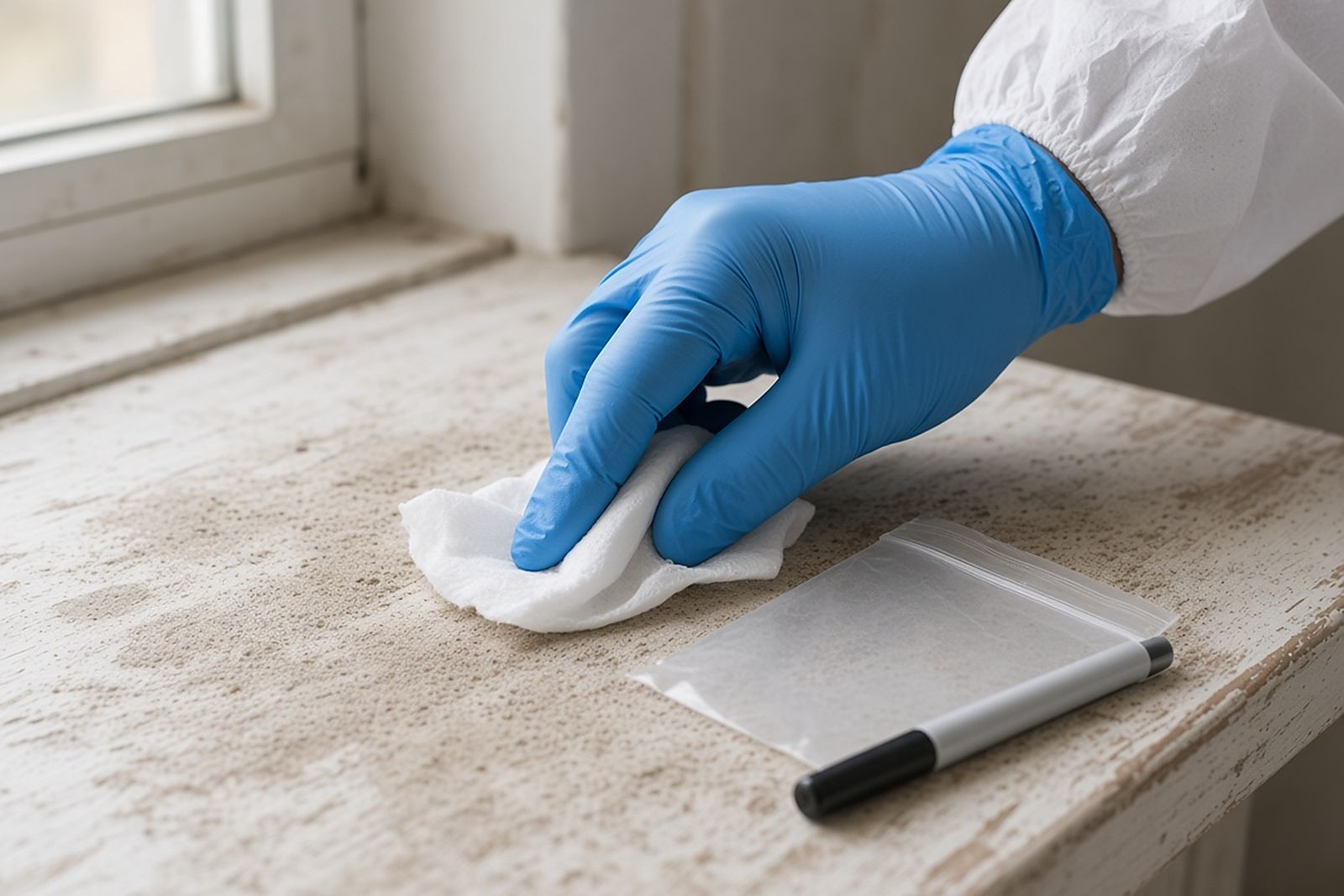
Adenosine triphosphate is the energy molecule of living cells. The test swab contains an enzyme system that glows when it contacts ATP, and the handheld reader converts that glow into a number. The more cellular or organic residue on the swabbed area, the higher the reading tends to be.
CS is a synthetic crystalline compound. CN is also synthetic. OC comes from pepper plants, but the oily extract used in sprays is processed, and the irritating capsaicinoids are not ATP. None of these agents produces the light reaction the test depends on.
In other words, a surface can be coated in tear gas residue and still give a low ATP number. A clean-looking ATP result on a kitchen counter in a gassed home tells you that little organic soil is present. It tells you nothing about the agent.
Five places ATP does make sense on a tear gas job
Tear gas deployments often happen alongside other events that leave biological contamination, and those parts of the job may benefit from an organic-soil check.
- Blood from injuries sustained during a forced entry or broken glass.
- Vomit, urine or other body fluids from people or animals who were exposed and could not leave the space quickly.
- Spoiled food in a refrigerator or pantry after a long displacement with the power off.
- Pet waste in a home that was sealed for days while an animal remained inside.
- Food-contact surfaces in a restaurant or commercial kitchen that must meet their normal sanitation program before reopening.
The risk of clearing a gassed room with ATP
The risk is false confidence. If a crew wipes surfaces, gets low ATP readings and declares the room clean, residue in carpet fibers, drapes, upholstery and ductwork can still irritate occupants. People move back in, turn on the heat and start coughing again.
An inaccurate clearance has consequences for people's health, not just for the paperwork. A clearance decision should rest on evidence that actually relates to the hazard. For tear gas, that means a documented chemical cleaning process and a careful check for irritation, not a biology number.
How cleaning products can flatter an ATP report
Many detergents, disinfectants and alkaline cleaners interfere with the enzyme reaction inside an ATP swab. Some suppress the light the reader measures, which pushes readings down regardless of how much organic soil is actually present. On a tear gas job, where crews may use alkaline solutions to speed breakdown of CS, that interference can make low numbers even less meaningful.
This is not a trick on the provider's part. It is a known limitation of the chemistry, and reputable ATP manufacturers publish lists of products that affect their reagents. It does mean a report showing uniformly low readings across a gassed house should be read with skepticism.
If a provider insists on including ATP data, ask when swabs were taken relative to the final rinse, which cleaning products were on the surface and whether the device maker lists those products as interfering. A provider who can answer those questions understands the tool. One who cannot is probably using it as decoration.
What should verify tear gas cleanup instead?
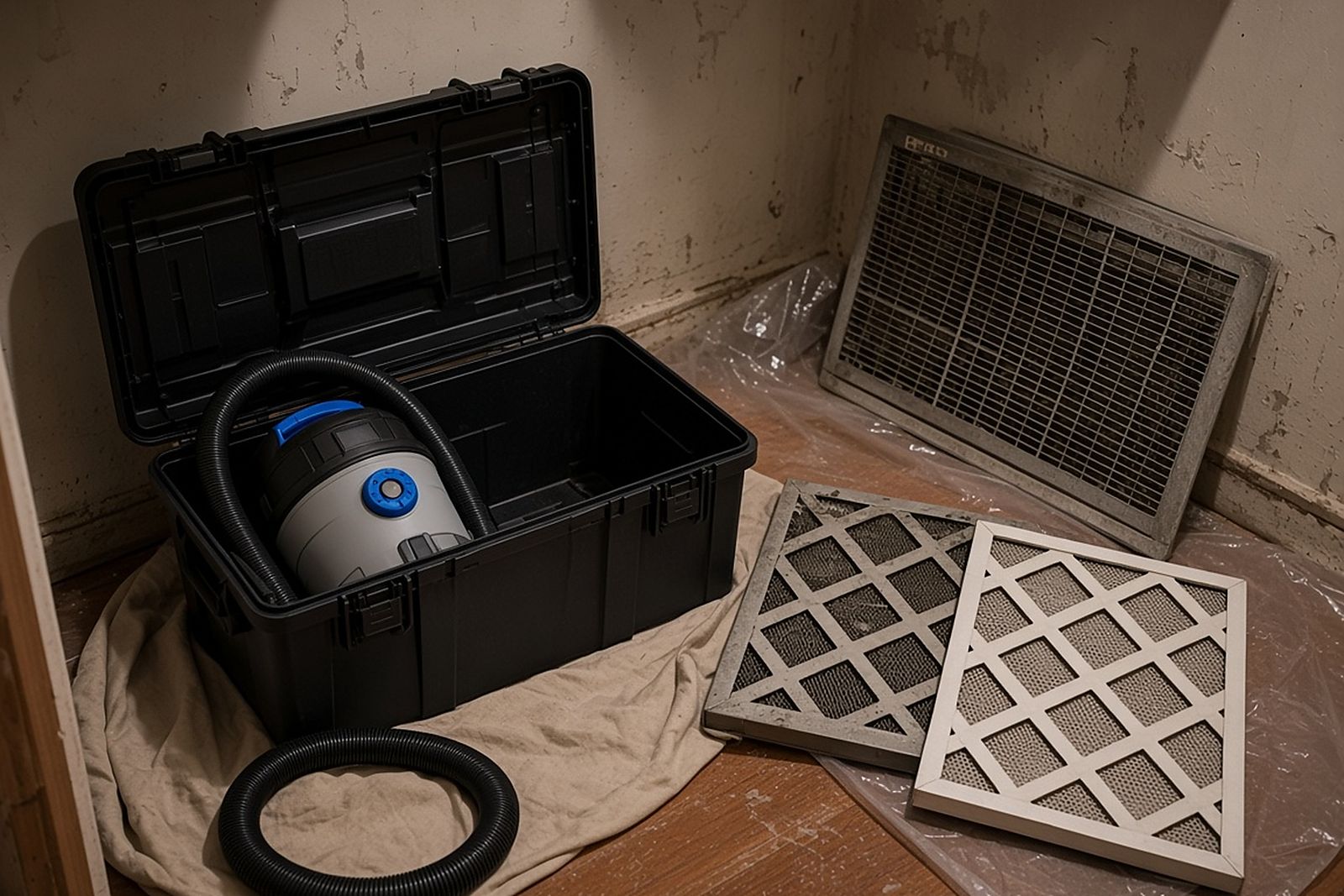
The most practical verification is the process itself, carefully documented. That means showing that the HVAC was locked out, surfaces were HEPA vacuumed before wet cleaning, cleaning chemistry suited to the agent was used, soft goods were cleaned or removed according to a stated inventory and the duct system was addressed before restart.
Chemistry matters here. A provider who can explain why they chose a mildly alkaline solution for CS, and a different detergent approach for oily OC, is showing the kind of reasoning that matters more than any swab.
Walkthroughs and laboratory sampling
The walkthrough is the next layer. With the HVAC running normally, the crew lead and the owner move through each room, sit on furniture, open closets and handle soft goods that were kept. Stinging eyes, throat irritation or a peppery smell point to spots that need more work.
Where there is a dispute, a medical concern or a high-occupancy building, some owners commission surface wipe or air sampling analyzed by a laboratory for the specific agent. Ask the provider or an independent industrial hygienist what the sampling method can detect, what the results will be compared to and what it costs before deciding.
A restaurant reopening after a street protest
Consider a small restaurant, used here as an illustration. During a nighttime protest, CS canisters land on the sidewalk outside a small restaurant. The front door is open, and the dining room fills with gas. Staff leave through the back, and the kitchen hood fan keeps running for an hour.
The owner hires a provider whose first proposal lists ATP verification of all surfaces as the final step. The owner asks what ATP detects and learns it does not respond to CS. The provider revises the plan.
In the revised scope, the crew HEPA vacuums the dining room and kitchen, washes hard surfaces with a mildly alkaline solution, sends table linens and staff uniforms out for separate laundering, removes the entry mat and cleans the hood, filters and accessible duct. Open food that was exposed is discarded.
ATP swabs are still used, but only on food-contact surfaces in the kitchen, to confirm they meet the restaurant's normal sanitation standard before service. The closeout report separates the two questions: the agent was addressed through the documented chemical process and a walkthrough with the hood running, and food-contact cleanliness was checked with ATP. The restaurant is illustrative, but the split between chemical and biological verification is the right one.
Reading a closeout report that includes ATP numbers
Look for which surfaces were swabbed and why. If the report lists ATP readings on walls, carpet or ducts in a tear gas job, ask what those readings are meant to show. If the answer is that they prove the gas is gone, that is a misunderstanding worth correcting.
A well-written report keeps each claim tied to the right evidence. Statements about the agent should reference the cleaning steps, products and soft goods decisions. Statements about organic cleanliness can reference ATP where it was used.
Watch for sweeping phrases such as certified gas-free or verified safe unless there is chemical-specific testing behind them. For rental housing, schools and food businesses, ask the local health or housing department whether any official clearance is required for your property type.
Questions to ask before paying for any testing
Testing is only worth paying for when you know what it will tell you. Before approving a line item, ask the provider to explain what the test detects, where samples will be taken, what result would count as acceptable, what they will do if a result fails and who analyzes the samples.
If the answers are vague, or if the test does not relate to CS, CN or OC, you may be better served by spending that money on more thorough soft goods treatment or duct cleaning. Those steps directly reduce the reservoirs that cause symptoms to return.
If anyone in the household or workplace still has symptoms after cleaning, tell the provider and a medical professional. Persistent irritation is information, and it deserves a follow-up visit regardless of what any test report says.
Keep every report, invoice and photograph together. If irritation returns months later, perhaps when the heat runs for the first time in winter, that file lets a new provider see exactly what was and was not done.