Tear Gas Residue Cleanup: Education
Science and technology used in some tear gas residue cleanup scopes, with explicit limits for ATP, disinfectants, enzymes, fogging, air equipment, and moisture tools.
The education group explains what tear gas and pepper spray really are once the smoke has cleared. Articles describe how CS forms a fine solid that clings to fibers and drifts into ducts. They explain how OC is an oily resin that smears instead of making dust. They explain why older CN products behave differently again. You will also find posts on how residue moves through a building. They explain why it can seem to go away and then come back on humid days. They also cover which household materials hold it the most. This background helps you understand why a provider's plan looks the way it does.
Get an email reply about tear gas residue cleanup
Send a short message to the follow-up inbox. A coordinator can reply by email. This form does not send emergency help; call 911 first if anyone is in danger.
We also use this group to clear up common myths. One is the idea that airing a house out for a weekend is enough. Another is that a fresh coat of paint will seal residue away. Articles compare tear gas with smoke damage and normal dust, so you can see why the cleaning methods differ. Some posts look at how gas ends up being used in homes, businesses, and schools, and what that means for the spaces affected. The aim is plain explanation without technical terms. That way you can read a scope of work and see whether it fits the gas that was used in your space.
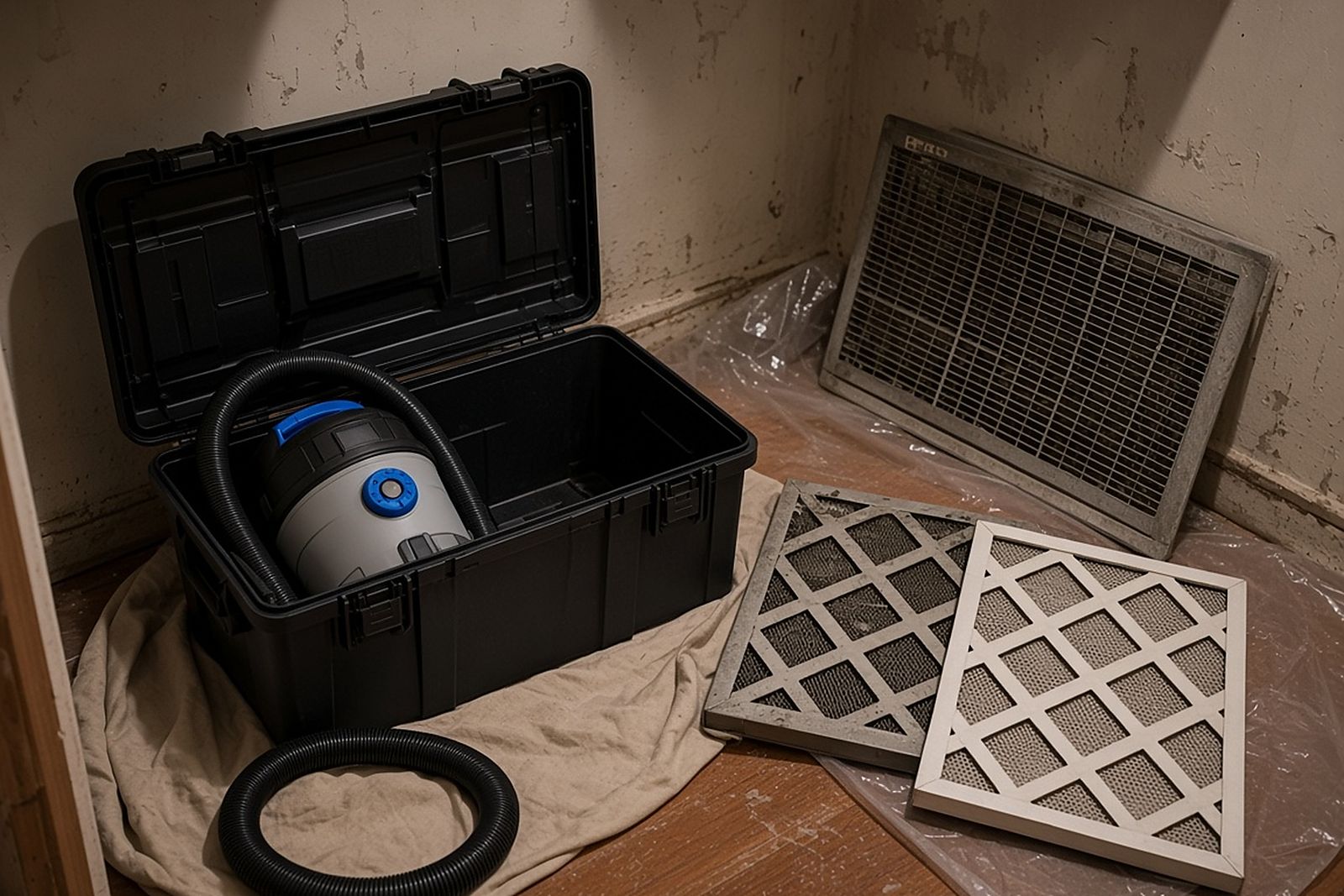
The Science Behind Tear Gas Residue Cleanup
What CS, CN and OC actually are, how they cling to fabric and ductwork, why heat and moisture reactivate them, and why pH matters in tear gas residue cleanup.
Tear gas is not really a gas. CS and CN are fine solids, and OC is an oily resin, dispersed as aerosols that settle on every surface they reach. Residue clings to fabrics, porous materials and ductwork, then reactivates when warmed, moistened or disturbed. Effective cleanup removes particles without re-aerosolizing them, uses chemistry that breaks the agent down, and treats soft goods and HVAC as reservoirs.
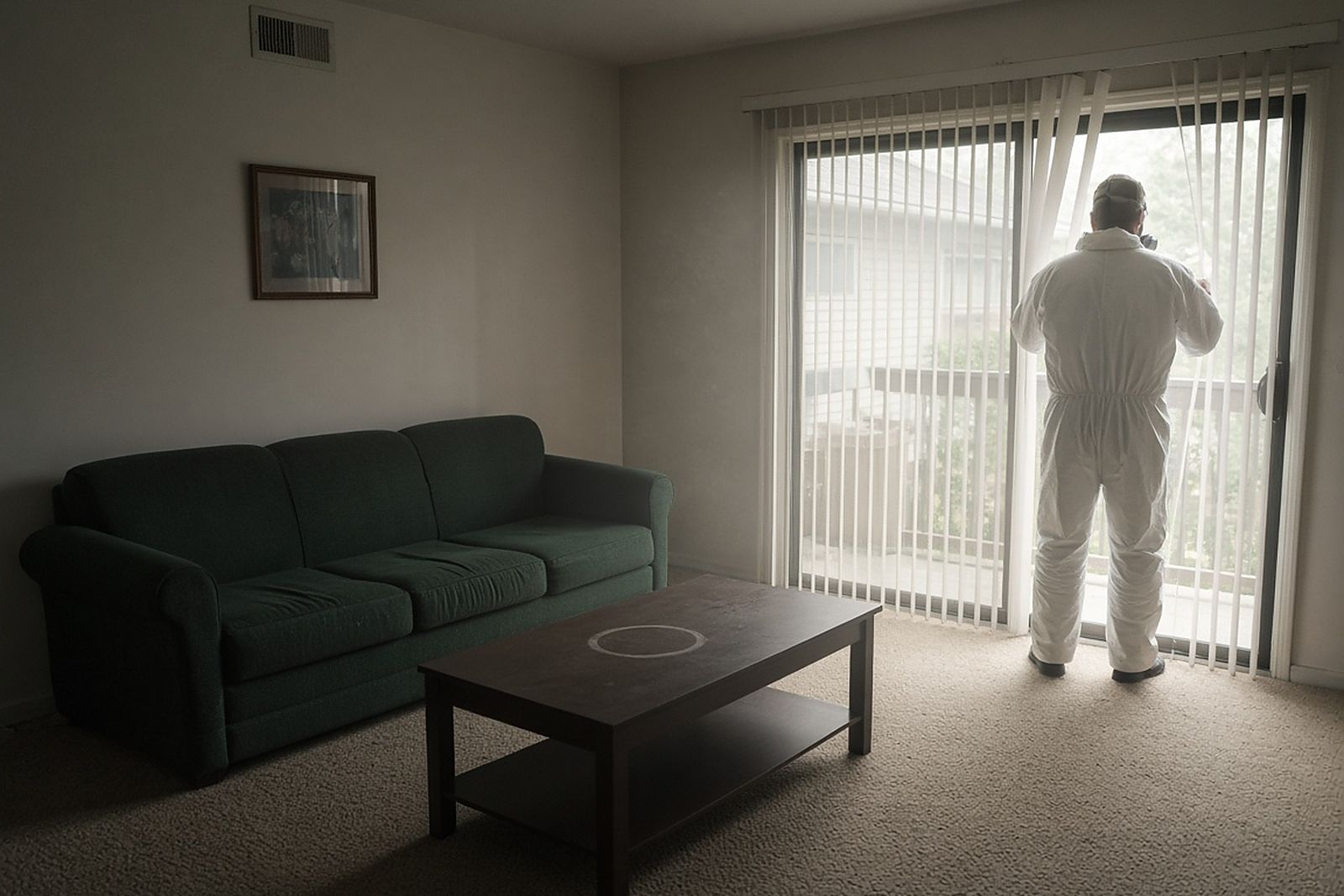
How to Evaluate Equipment Proposed for Tear Gas Residue Cleanup
Full-face respirators, HEPA vacuums, alkaline washes, duct tools and laundering plans: how to judge the equipment a tear gas residue cleanup crew proposes.
Good equipment for tear gas residue cleanup matches the agent and the building. Look for full-face respirators with suitable cartridges and chemical-resistant suits, HEPA vacuums rather than ordinary ones, cleaning solutions chosen for CS powder or OC oil, tools to clean or replace HVAC components, and a plan for laundering or discarding soft goods. Fans, ozone and fragrance should never stand in for residue removal.

The Difference Between Cleaning and Disinfection in Tear Gas Residue Cleanup
Tear gas residue is a chemical irritant, not a germ. Why removal and neutralizing chemistry matter far more than disinfectants in tear gas residue cleanup.
Disinfection kills microorganisms, but tear gas agents such as CS and OC are chemical irritants, so disinfectants do little to remove them. Tear gas cleanup depends on physical removal through HEPA vacuuming and washing, cleaning chemistry suited to the agent, such as alkaline solutions for CS or degreasers for OC, and discarding soft goods that cannot be cleaned. Disinfection matters only if blood or other biological material is also present.
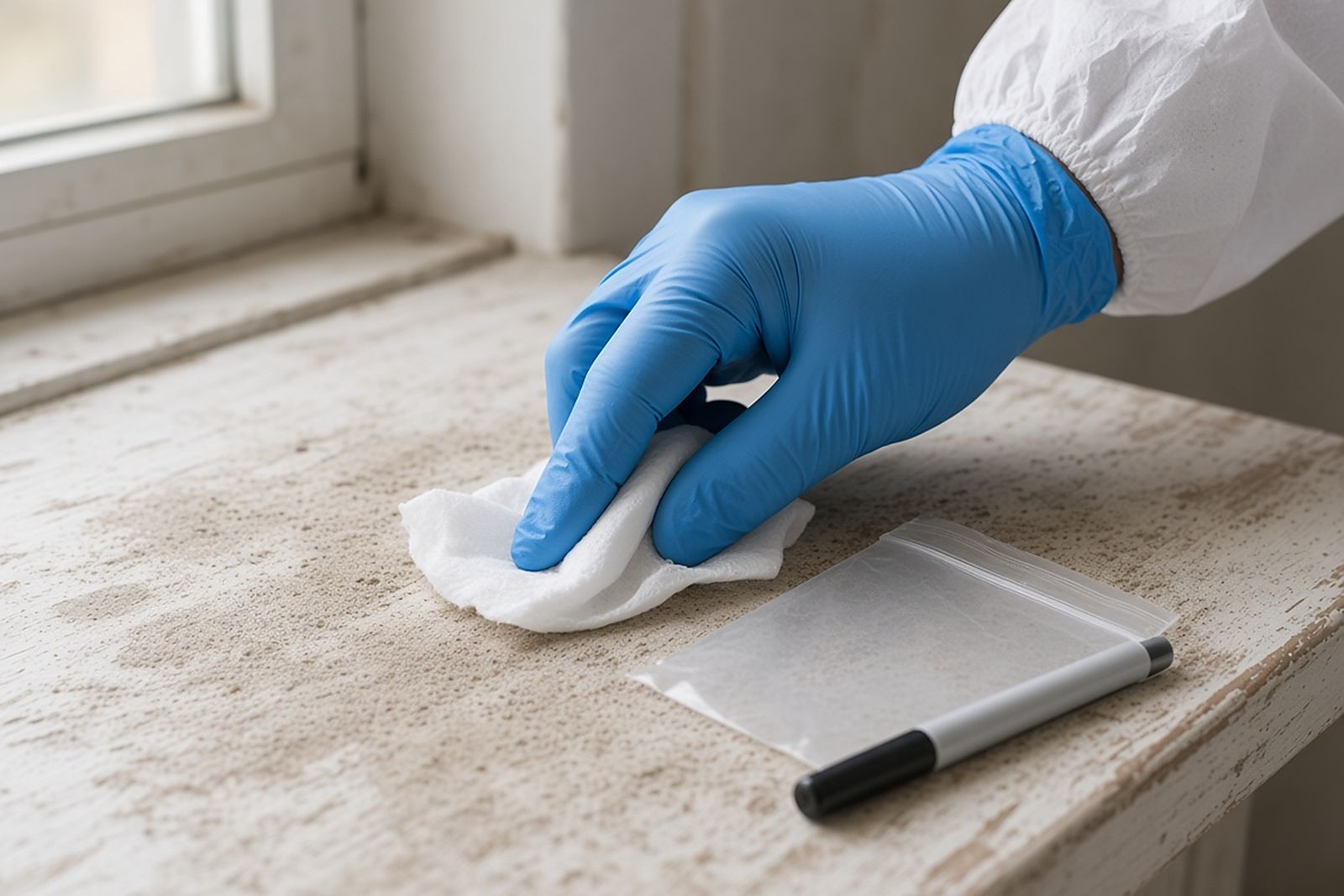
When ATP Testing Helps—and When It Does Not—in Tear Gas Residue Cleanup
ATP swabs detect organic soil, not CS powder or pepper spray. See when ATP belongs on a tear gas job, what to use instead and how to read a clearance claim.
ATP testing is built to detect organic residue from living cells, so it cannot tell you whether CS, CN or OC tear gas residue remains on a surface. It may help only on the parts of a tear gas job that also involve blood, food spoilage or other biological soil. For the chemical agent itself, rely on a methodical cleaning process, a symptom-based walkthrough and, where justified, chemical-specific sampling.
How to Evaluate Technology Used in Tear Gas Residue Cleanup
HEPA scrubbers, ozone, hydroxyl units, foggers and duct robots: how to judge which tools really help remove CS and pepper spray residue from a building.
Judge tear gas cleanup technology by whether it captures or chemically breaks down the agent, reaches the reservoirs where residue hides and is safe for the people and materials involved. HEPA vacuums, air scrubbers and duct cleaning equipment directly address the problem. Ozone, hydroxyl generators and deodorizing fogs mainly target odor and cannot replace physical removal of CS or OC residue.
When Enzymes or Microbial Products Fit Tear Gas Residue Cleanup
Enzyme and microbial cleaners are built for organic soil, not CS powder or pepper spray film. Learn where they fit and where they fall short on a tear gas job.
Enzyme and microbial products digest organic soils such as food, body fluids and pet waste. They are not designed to break down CS or CN, and they are not a proven way to remove oily OC residue. On a tear gas job they fit only organic side problems, such as spoiled food or pet accidents. The agent itself needs HEPA capture, suitable chemistry and removal of saturated soft goods.
Sourced figures on education
- 8.7% severe
Of 9,261 documented tear gas and pepper spray injuries, 8.7% were severe enough to require professional medical management and 17% were moderate.
Read with care: Severity depended heavily on enclosed spaces, prolonged exposure and high agent quantities.
Source: BMC Public Health (Haar et al.) (2017)Worldwide published cases, 1990–2015
- RR 2.44
Among 6,723 US Army recruits, the risk of acute respiratory illness was 2.44 times higher after mandatory CS exposure than in the training period before it.
Read with care: Young healthy adults with brief controlled exposure; effects in children or elderly residents may differ.
Source: Military Medicine (Hout et al.) (2014)Fort Jackson, South Carolina recruits, August–September 2012
- 86.1%
86.1% reported health issues in the days following exposure.
Read with care: Self-report and selection bias; protest exposure cannot establish residential re-entry conditions.
Source: Torgrimson-Ojerio et al. (2021)2,257 self-selected adults reporting exposure in Portland; July–August 2020 survey.
These figures are public research and agency data, not this network's own job records. Keep each number with its population, year and limits; none of them predicts cost, timing or outcome at a specific property.
What research has found
Findings from published studies of people and properties in situations like this one. They describe what researchers observed in a specific group; they are not predictions for your case.
Head and gastrointestinal complaints were slightly more frequent as delayed than immediate reports.
Education: common questions
Is pepper spray residue cleaned the same way as tear gas?
Not exactly. Pepper spray is oil based, so it tends to smear across surfaces and may need a degreasing approach, while CS behaves more like a fine powder that must be captured before wiping. Many deployments involve both, which is why knowing the agent matters. A provider should explain how their method accounts for each one.
Why do some rooms bother me more than others?
Residue collects where the air carried it and where surfaces trap it. So rooms near canisters or return vents often hold more. So do rooms with thick carpet and padded furniture. Rooms with hard floors and little fabric may feel clearer sooner. Noticing where irritation is strongest is useful to share with whoever plans the cleanup.
Does residue break down on its own over time?
Some of it may break down. But residue stuck in fabric, ducts, and soft materials can last long enough to keep bothering people for a long time. Waiting it out is not a reliable plan. This is most true if anyone in the home is sensitive. Removing it through planned cleaning is the dependable way.
Why is tear gas called a gas when the residue is a powder or oil?
The name comes from how it is delivered, as a cloud or aerosol that spreads through air. The active ingredients are usually fine solids or oily resins suspended in that cloud. Once the cloud settles, what remains is a film or dust on surfaces and fabrics. That residue, not the original cloud, is what cleanup crews need to remove.
How does the weather outside affect residue inside my home?
Indoor residue is sheltered from rain and sunlight. So it tends to last longer than residue outdoors. Outdoor humidity and heat can still matter. Warm or damp days may make indoor residue more irritating when windows are open or the air system runs. If symptoms seem worse on certain days, note the weather and share the pattern with your provider.
Can residue transfer from clothing to furniture or bedding?
Yes. Clothing worn during or after exposure can carry powder or oil onto couches, beds and car seats. That is why people are advised to change and bag clothing before entering clean areas. If transfer has already happened, add those items to the list for cleaning or evaluation. Washing hands and changing clothes before sitting down helps keep residue from spreading.
Where can I learn more about the specific agent used in my case?
Start with the police agency that came. It may share the type of gas through an incident report or a records request. Poison control centers can answer health questions about each type of gas. Your cleanup provider may know the type of residue from how it looks and acts. General articles on this site explain how CS, CN, and OC differ, and why that affects cleaning.
Related community polls
Every count is a real visitor vote; nothing is seeded or padded. One vote per poll per device, and you can change your answer.
How did tear gas end up in your building?
What was the first thing you tried to reduce the irritation?
More on tear gas residue cleanup
Tear Gas Residue Cleanup services
Learn what professional tear gas cleanup involves. It covers HEPA removal, the right chemicals, air system checks, choices about soft items, and safe return checks.
Costs explained
What drives the price, published cost ranges, and how to read a written quote line by line.
Insurance and payment
Which policies may respond, how to document a claim, and what to do if coverage is denied.
Planning tools
Use planners and checklists that walk you through the first day. They help you judge the risk of doing it yourself and get ready to talk with providers, landlords, and insurers.
Community polls
Compare your experience with other tenants, owners, and managers who dealt with tear gas residue. See which choices they found hardest afterward.
Knowledge quiz
Check what you know about how CS and OC residue behaves, why the air system matters, and what a thorough cleanup and its records should include.
Field guides
Read detailed guides on where residue hides, breaking it down versus cleaning it, who does what as landlord or tenant, and what a written cleanup plan should say.