Short answer
Tear gas is not really a gas. CS and CN are fine solids, and OC is an oily resin, dispersed as aerosols that settle on every surface they reach. Residue clings to fabrics, porous materials and ductwork, then reactivates when warmed, moistened or disturbed. Effective cleanup removes particles without re-aerosolizing them, uses chemistry that breaks the agent down, and treats soft goods and HVAC as reservoirs.
What is tear gas actually made of?
The name is misleading. The agents commonly called tear gas are solids or oils at room temperature, not gases. They are turned into an airborne cloud by a canister, grenade or spray, and that cloud eventually settles out of the air onto floors, walls, furniture and people.
The most widely used agent in the United States is CS, a white crystalline powder. An older agent, CN, is also a solid and is found in some legacy products. OC, often called pepper spray, is an oily extract derived from hot peppers and contains capsaicinoids as its active compounds.
How the agents irritate, and what carriers add
Each of these agents works by stimulating nerve receptors in the eyes, nose, throat and skin, which produces burning pain, tearing, coughing and a strong urge to escape. The same properties that make them effective on people make their residue a nuisance long after the cloud has cleared.
Manufacturers often blend the agent with carriers, solvents or pyrotechnic ingredients so it disperses evenly. Those additives can leave their own film, soot or odor on surfaces, which is one reason an affected room may smell smoky or chemical even after the sharp sting in the air has faded.
How the agent enters a building and where it settles
Indoors, tear gas usually arrives through a broken window, an open door or an introduced canister. Some canisters work by burning a pyrotechnic mixture that vaporizes the agent, which then condenses into tiny particles as it cools. Others blast a powder or liquid outward mechanically.
Once airborne, particles follow air currents. They drift into hallways, up stairwells and into rooms that were never directly exposed. If a furnace or air conditioner is running, the return vents pull contaminated air into the ductwork and distribute it through the whole building.
Particles eventually fall onto horizontal surfaces and cling to vertical ones. Heavier deposits usually sit near where the canister landed, but a thin layer is often spread widely. Pyrotechnic devices can also leave scorch marks and soot, which carry agent residue of their own.
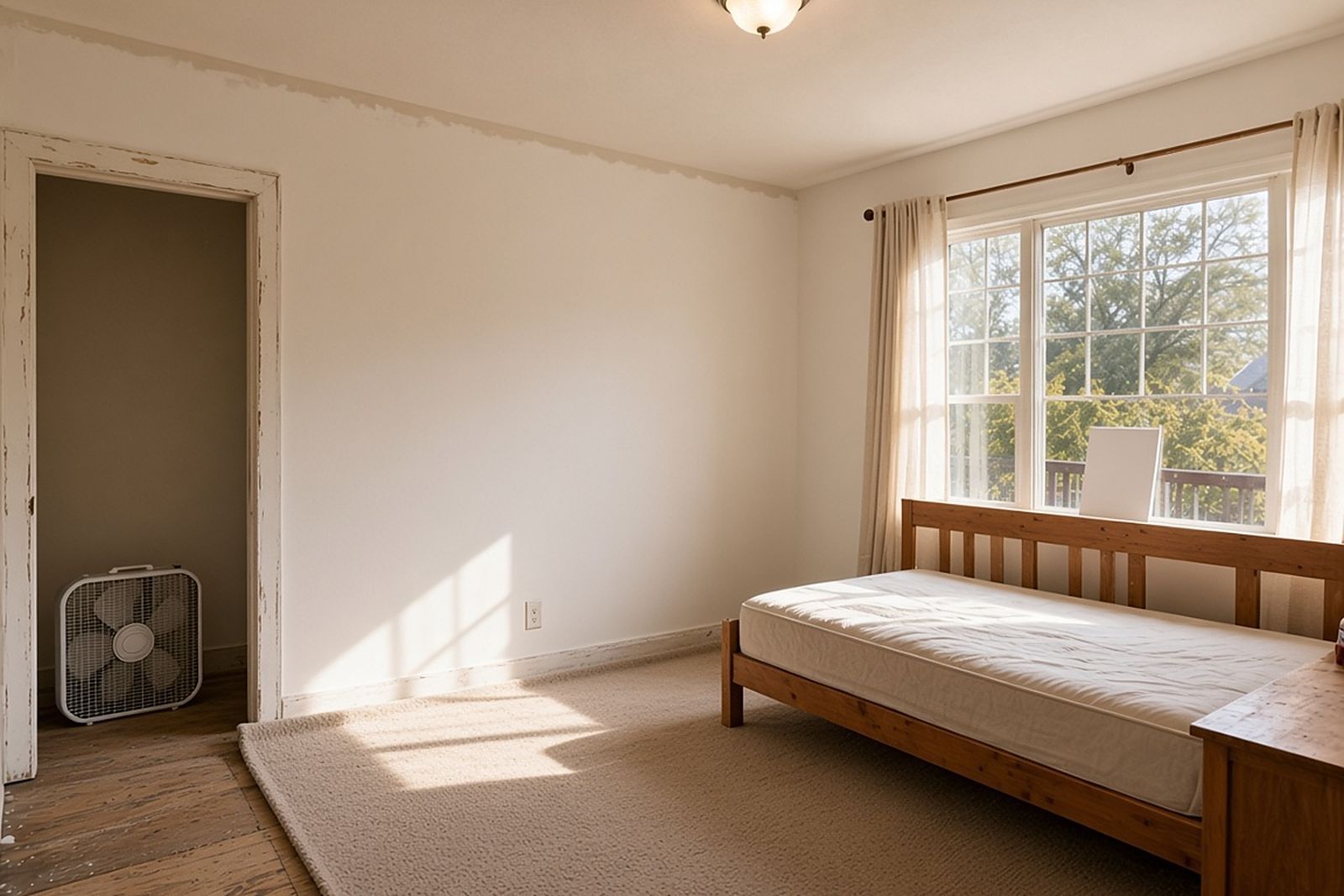
Building features change the pattern. High ceilings, open stair halls and return grilles located near the point of entry tend to spread residue farther, while closed interior doors can keep some rooms relatively clean. A technician reading the floor plan can often predict where to expect heavier deposits before any cleaning starts.
Why does residue cause symptoms days or weeks later?
Tear gas residue is persistent in sheltered indoor environments. Particles lodged in carpet fibers, upholstery, bedding, curtains and clothing are protected from the sunlight and rain that would help break them down outdoors.
Those particles can become active again when disturbed. Walking on carpet, sitting on a sofa, shaking out a blanket or running a vacuum without proper filtration can lift fine particles back into the air. Warmth and moisture can also increase irritation, which is why some people notice symptoms return when they turn on the heat or take a hot shower in an affected bathroom.
OC residue behaves a little differently. Because it is oily, it smears rather than dusts, and it can transfer from surfaces to hands and then to the eyes or face. Water alone tends to spread it rather than remove it.
Pets are a useful early warning. Dogs and cats that sneeze, paw at their eyes or avoid certain rooms after a deployment may be reacting to residue in carpets or bedding at nose level. If your animals show signs of irritation, keep them out of those spaces and ask your veterinarian for guidance.
pH and the breakdown of CS
Chemistry offers an advantage when dealing with CS. The molecule reacts with water in a process called hydrolysis, which breaks it into less irritating compounds. That reaction happens much faster in alkaline conditions.
According to a 2014 National Research Council review, CS hydrolyzes with a half-life of about 15 minutes at pH 7 but about 1 minute at pH 9, a large difference in speed for a small change in alkalinity. That finding helps explain why remediation crews typically choose mildly alkaline cleaning solutions for hard surfaces rather than plain water or acidic cleaners.
Alkaline cleaners are not a universal answer. Some finishes, stones and plastics can be damaged by high pH, and oily OC residue needs a detergent that can emulsify oil. A trained technician chooses products based on the agent and the surface, and tests in an inconspicuous spot when there is any doubt.
Worker exposure limits
Occupational exposure limits exist for CS because it is a recognized workplace hazard for people who manufacture, test or clean up after it. The NIOSH Pocket Guide lists the recommended exposure limit for CS as a ceiling of 0.05 ppm (0.4 mg/m³) with a skin notation, and notes that the OSHA PEL is the same value as a time-weighted average.
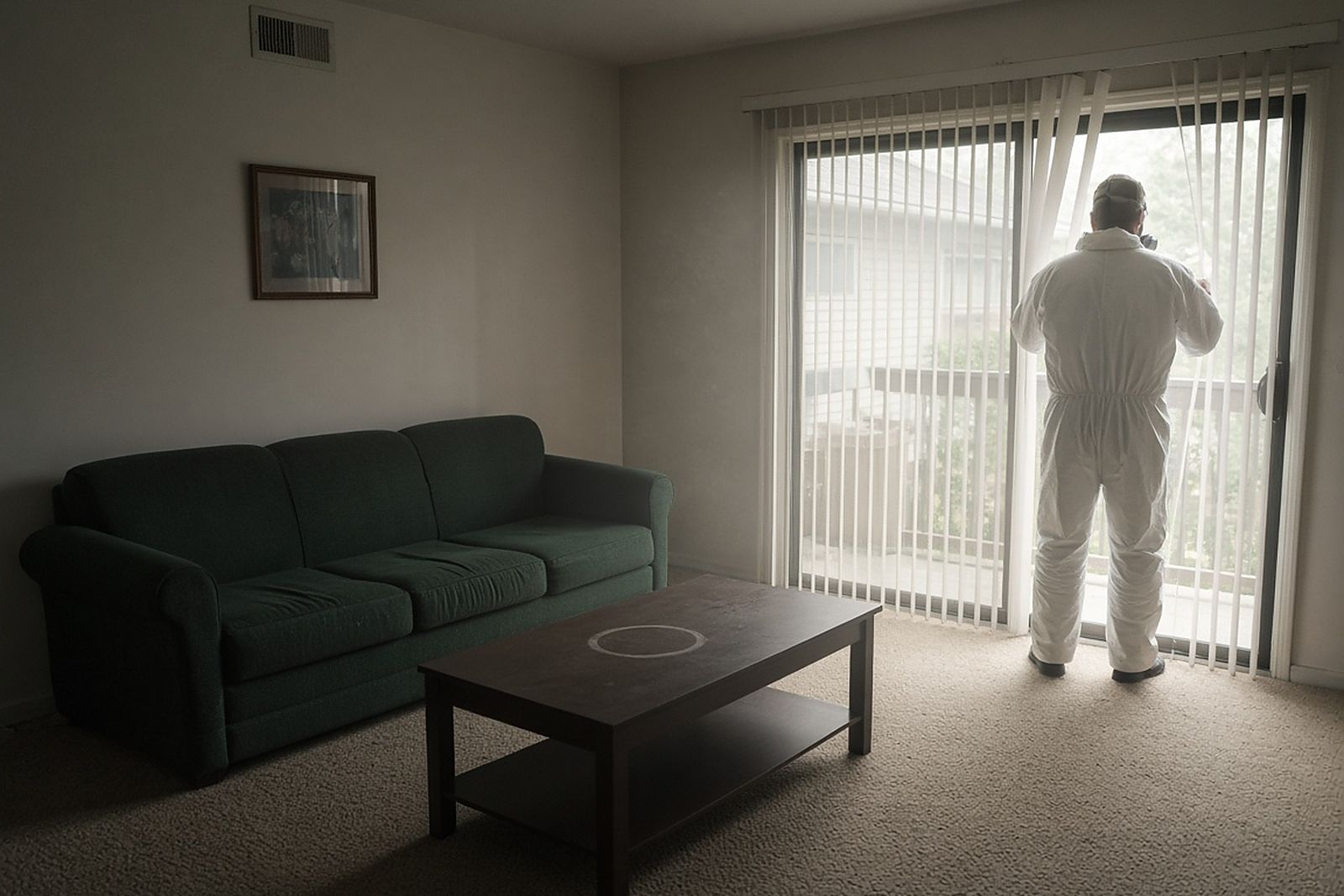
The skin notation matters. It means the agent can be absorbed through or irritate the skin, so protection needs to go beyond a respirator. Cleanup crews typically wear full-face respirators with appropriate cartridges, chemical-resistant suits and gloves, and they seal cuffs and seams so that particles cannot reach the skin during the work.
For you as a homeowner or tenant, the lesson is simple. If entering a room makes your eyes water or your throat burn, the air or surfaces still carry enough agent to affect you, and that area should wait for professionals.
Soft goods: the hardest material to clear
Hard, sealed surfaces like tile, glass, metal and finished countertops can usually be cleaned thoroughly with HEPA vacuuming and washing. Soft and porous materials trap particles deep inside, where brushing or wiping cannot reach.
Mattresses, pillows, upholstered furniture and wall-to-wall carpet are the classic reservoirs. Some can be professionally laundered or deep-cleaned with specialized extraction methods, while others are removed because the cost and uncertainty of treatment outweigh replacement. Clothing and bedding can often be laundered, but many crews recommend separate, repeated cycles and caution against mixing affected items with clean laundry.
Ductwork, the hidden reservoir
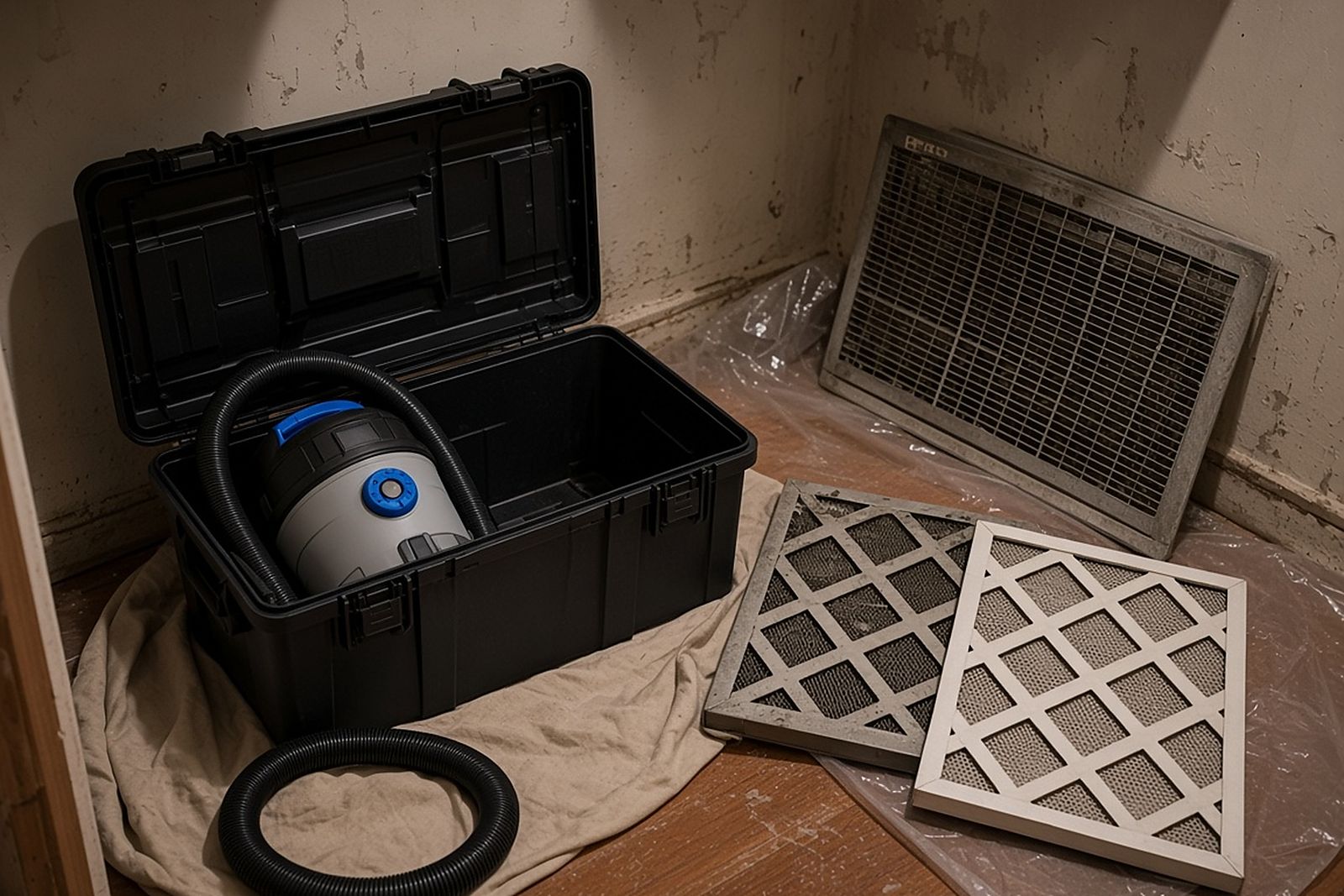
Ductwork is a hidden reservoir. Particles stick to the inner surfaces of ducts, to air handler components and to filters. If the system is turned on before the ducts are cleaned, residue can be redistributed into rooms that were already cleaned. Professional crews usually replace filters, clean accessible ducts and registers and sometimes service the air handler before the system runs normally again.
A split-level home, traced step by step
To see the science at work, follow a composite case. Police deploy several CS canisters into the lower level of a split-level house during a standoff. The homeowner, who was away at the time, returns two days later after the house is released.
Upstairs looks untouched, but the homeowner's eyes sting in the kitchen and the upstairs bedrooms. The furnace had been running during the deployment, pulling contaminated air from the lower level into the return and pushing it to every room through the supply vents.
The remediation crew shuts down and seals the HVAC system first. They HEPA vacuum ceilings, walls and floors in every room, then wash hard surfaces with a mildly alkaline solution, rinsing between passes. The lower-level carpet and a sofa near the canister landing spots are removed. Bedding and clothing from upstairs closets are bagged for off-site laundering. The duct system is cleaned and the filter replaced before the furnace is restarted.
After the work, the homeowner walks through with the crew lead and no longer notices irritation. The house is a composite, but the path from lower level to upstairs through the ducts is a common pattern.
Six ways the wrong cleaning method makes things worse
Well-meant cleaning often spreads tear gas residue instead of removing it. A few common mistakes illustrate how the science works against you.
- Dry sweeping or using a regular vacuum launches fine particles back into the air.
- Running fans or the HVAC system moves residue into clean rooms and deeper into ducts.
- Using very hot water on heavily contaminated items can increase irritation during handling.
- Wiping OC residue with plain water tends to smear the oil across a larger area.
- Washing contaminated clothing with other laundry can transfer residue to clean items.
- Painting over residue can trap agent under the new coat, where it may still be disturbed during later repairs.
Before professionals arrive
Keep people and pets out of affected rooms, and leave the HVAC system off. If you must retrieve essential items such as medication, move quickly, avoid touching your face and wash your hands and exposed skin with soap and cool water afterward.
Photograph the damage for insurance and documentation before anything is moved. Confirm with the responding agency that the property has been released and whether it wants to be notified before cleanup begins.
If anyone has lingering breathing problems, eye pain or skin irritation, contact a medical provider. Residue cleanup restores the building, but your health deserves its own attention.
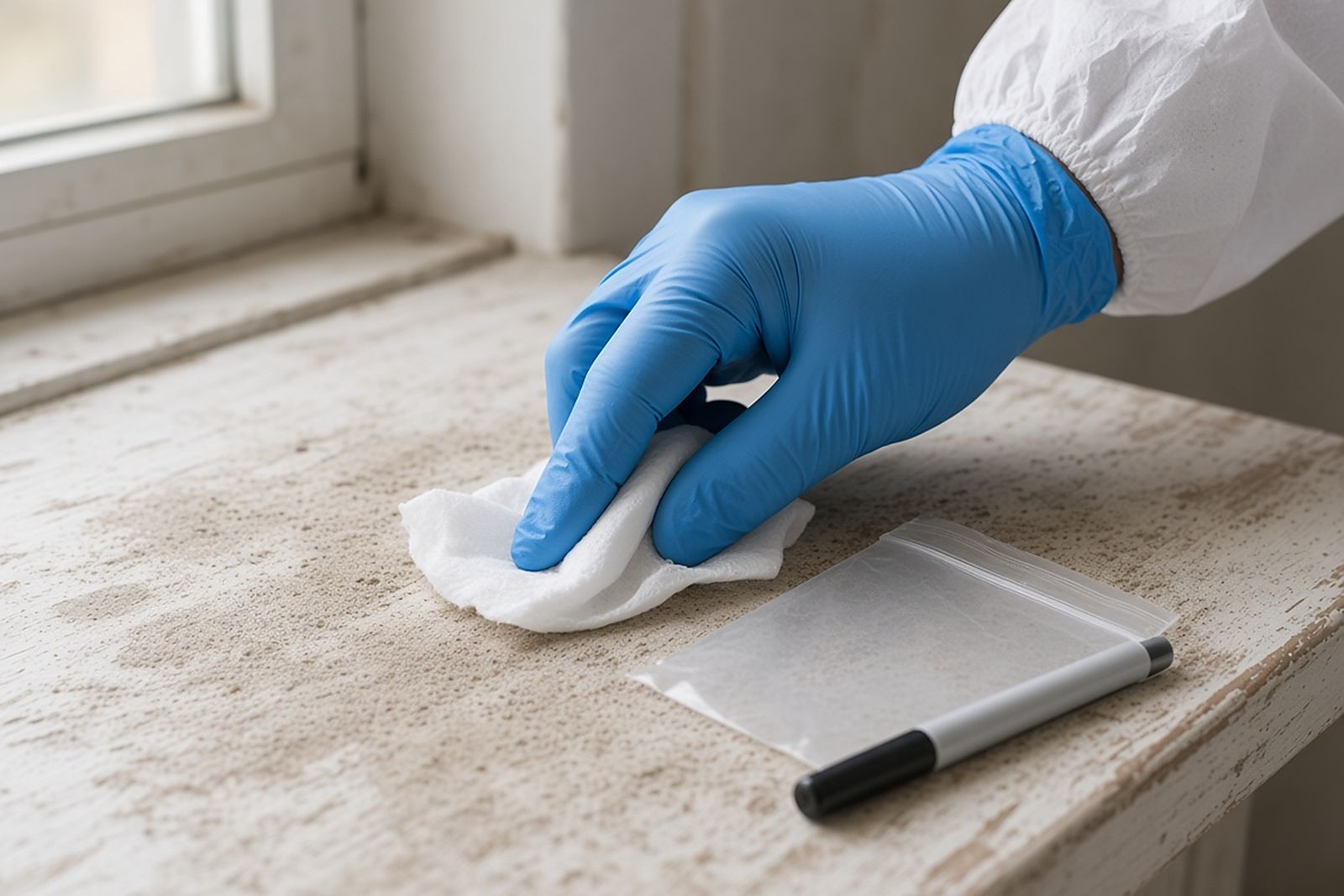
Write down which rooms had open or closed doors at the time, whether the heating or cooling system was on, and where canisters or spent munitions were found. That short list helps the crew decide where to sample, where to start and which areas are likely to need the most attention.