15 questions, each with an explanation

Tear Gas Residue Cleanup quiz and study guide

Find out what you already understand, then read the parts you missed.

This 15-question quiz checks whether you understand how tear gas behaves once it is inside a home. It also checks what that means for cleanup. The questions cover the first trip back inside and what to do with the heat, air, and fans. They cover spent canisters, burning skin, and where to sleep the first night. They cover why crews vacuum before they wash, and why cleaning is different from covering up a smell. They cover how to judge a company, what drives the cost, and what records to keep for claims. You do not need any lab knowledge. The questions ask you to think the way a careful company would. That is also how you need to think when you review a work plan or a quote.

Get an email reply about tear gas residue cleanup

Send a short message to the follow-up inbox. A coordinator can reply by email. This form does not send emergency help; call 911 first if anyone is in danger.

Tell us what you need help with. Share a short description; please leave out medical details, access codes, and other sensitive information.

A request does not confirm a booking. For immediate danger, contact local emergency services.

Or email info@teargascleanup.online

You can take the quiz first to see where your guesses land. Or you can take it after reading the study guide to lock in what you learned. Every answer comes with an explanation. Those explanations are the most useful part, because with tear gas, common sense often points the wrong way. Your score is not stored and does not certify anything. If a question surprises you, the linked guides go deeper. By the time you talk with a company, you will know the words to use. You can ask about HEPA methods, air system pathways, and how they decide about soft items in terms they will know.

Tear Gas Residue Cleanup knowledge check

15 questions about real tear gas residue cleanup situations: staying safe, what happens, cost, choosing help and the rules. Every answer comes with a short explanation.

Why this quiz matters

Knowing these basics makes it easier to spot bad advice and ask a company the right questions. This quiz is educational — it does not certify anyone. After the quiz, review the explanations for questions you missed. For professional guidance on your specific situation, use the contact form at the top of the page for an email reply.

Progress1 / 15
SafetyQ1

Police used tear gas in your house, and you are about to go back in for the first time. What should you do with the furnace, air conditioner, and fans?

Study guide: the six ideas behind the questions

Read these before or after the quiz. They cover the concepts every question draws on, written for tear gas residue cleanup specifically.

1Recognizing residue and its behavior

Tear gas is made to irritate at tiny levels. So the amount left behind does not have to be visible to matter. Look for a fine whitish or yellowish film on flat surfaces. Notice any chemical or peppery smell. The clearest sign is eye, throat, or skin irritation that comes back when someone enters, walks on carpet, or the air system starts. CS lands as crystals that lift again with damp air and air movement. OC is oily and sticks to fabrics and surfaces people touch. Both build up in filters, return vents, ducts, and soft materials. The problem is spread-out residue, not a smell in the air. Seeing that is the first step toward a plan that truly works.

2Access, authority, and when work can start

After a police operation, the building may be part of an investigation. Entry can be limited until the agency releases it. Any unused canisters or devices that remain are for the authorities to handle. People who live there or clean there should never touch them. Once the space is released, who controls the cleanup depends on ownership and agreements. A landlord usually controls the building and its systems. A tenant controls belongings. A business lease may spell out duties in detail. Buildings with many units add a property manager or owners' board. Rules vary by state and county, so check with the local office when the lines are unclear. Record who released the scene, who approved the work, and when. Those facts support every later claim.

3Containment and stopping the spread

Residue spreads through foot traffic and handling of soiled items. Most of all, it spreads through moving air. Containment means blocking each of these paths. Shut off the heating and cooling system that serves the area until a company checks it. Close inside doors, and keep people and pets out. Do not sweep. Do not use a home vacuum. Do not carry rugs, curtains, or cushions into clean rooms to look at them. Anything that leaves the space can spread residue. That includes the clothes and shoes of the last person inside. Companies add plastic walls, controlled entry, HEPA air cleaners, and protective clothing that stays in the work zone. In shared buildings, hallways and shared return vents need the same care as the room where the gas was used.

4Neutralization versus cleaning versus deodorizing

Three words get mixed up, but they mean different things. Cleaning removes material by hand and machine. It uses HEPA vacuums to lift settled particles and wet methods to wipe surfaces. Neutralizing uses chemicals chosen for the exact gas to break it down so it stops irritating. For CS, these are often alkaline cleaners. Deodorizing covers up or changes smell and does nothing to the residue. Plain soap, bleach, and vinegar do not reliably break down tear gas. Mixing products in hopes of extra strength can create dangerous gases. Wet cleaning before HEPA removal smears residue deeper. A sound plan puts these steps in a set order. Dry particle removal comes first, the right chemicals second, and any odor or cosmetic work last.

5Where the waste goes

Cleanup produces used air filters, HEPA vacuum contents, removed carpet and padding, furniture, ceiling tiles, and cleaning supplies. These are not biological waste, so medical waste rules do not usually apply. But they are not always regular household trash either. It depends on where you live. Some agencies treat bagged and sealed debris as regular trash. Others may require different handling. This is more likely for large business loads or when other chemicals are involved. Rules vary by state and county, so check with the local office or your state environmental agency. A company should bag materials inside the sealed work area so residue is not stirred back into the air during removal. They should also record what was thrown out and where it went.

6Documentation and confirming re-entry

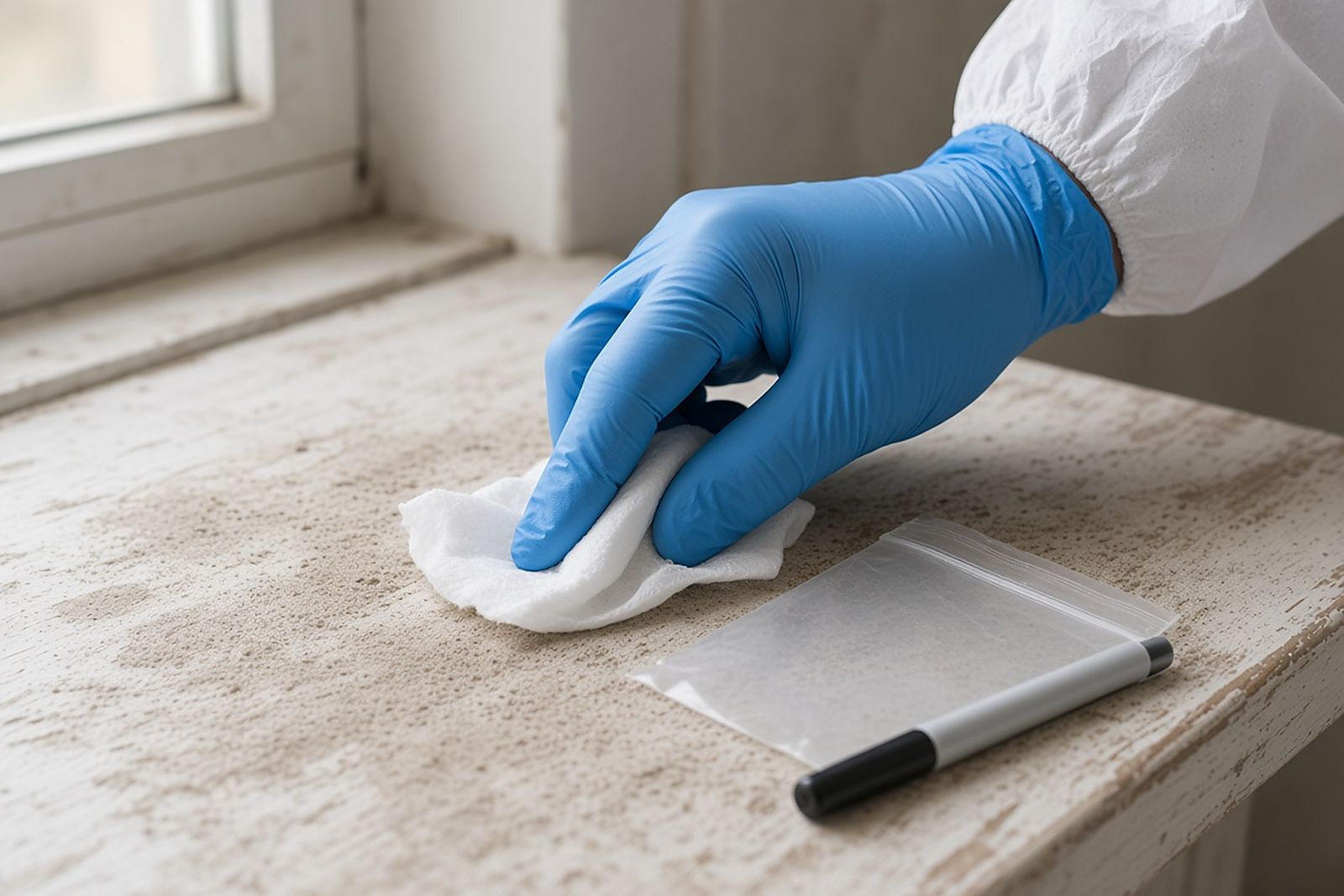
There is no widely accepted meter that reads tear gas residue. Swab tests used for other cleanups, which show leftover organic residue, do not apply here. So checking the work relies on a mix of methods. One is a careful look under strong light. Another is confirming that filters were replaced and return vents cleaned. Another is a record of which soft items were removed and which were cleaned. The last is a controlled return, where sensitive people spend time in the space and report whether irritation comes back. Records should include before and after photos and the products used with their purpose. They should list air system work, choices about belongings, and any agency incident number. Keep all of it. Insurers, landlords, tenants, and future buyers may ask what was done, and a spoken promise will not answer them.
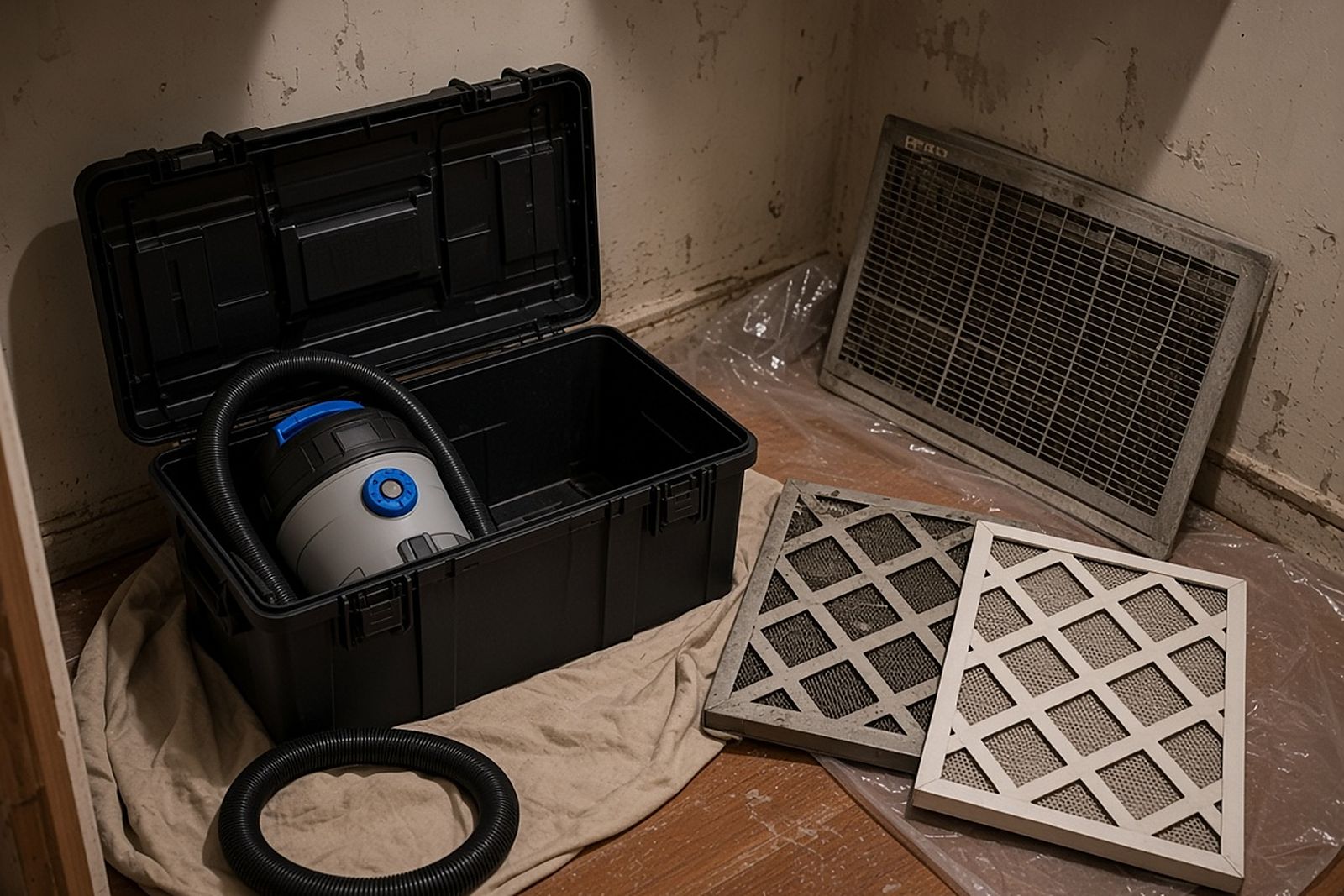
HEPA vacuum in an open case next to a removed return-air grille and used air filters

Facts worth knowing

  • In a 2020 Portland survey, people who reported more days of tear gas exposure also reported more delayed health issues, except for mouth problems.

    Why it matters: Repeated exposure may matter, so try to limit how often you are around tear gas or its residue.

    Source: Torgrimson-Ojerio et al., 2021

  • In lab tests, CS tear gas dissolved in neutral water breaks down by half in about 15 minutes, but in a mildly alkaline solution it takes about 1 minute.

    Why it matters: Ask what cleaning solution your company uses; plain water may work slowly, and dry residue in carpet or walls can be harder to remove.

    Source: National Research Council, 2014

  • Among Army recruits at one base in 2012, breathing illnesses were about 2.4 times as common after required CS tear gas exposure as before it.

    Why it matters: If you develop a cough or breathing trouble after time in a gassed home, see a doctor; children and older people may react differently.

    Source: Military Medicine (Hout et al.), 2014

Questions about the tear gas residue cleanup quiz

Is this quiz useful if the gas came in from outside during a protest?

Yes. The residue behaves the same way whether it came in through an open window or was used indoors. But it spreads out in a different pattern. Gas pulled in from the street often loads window coverings, nearby soft furniture, and the air system intake, rather than one room. The quiz ideas about sealing off the area, air system paths, and choices about soft items apply directly. The study guide notes where an outdoor event changes the plan.

Does a high score mean I can clean the residue myself?

No. Knowing the ideas is not the same as having HEPA equipment, the right neutralizing chemicals, and breathing protection. It also is not the same as being able to check ducts. A strong score means you can spot residue and avoid the mistakes that spread it. It also means you can judge whether a company's plan is thorough. Whether a certain event is safe to handle yourself depends on the type of gas, how far it spread, whether the air system was involved, and who uses the space. The DIY risk check walks through that.

Why does the quiz emphasize HVAC so heavily?

Because ducts are the most common reason a cleanup fails. A room can be cleaned well and then soiled again within hours. The air system pushes residue from return vents and supply ducts back into it. Many people never think about the system because they cannot see inside it. The quiz makes the air system a theme that comes up again and again. That way, asking whether the system ran, and what was done about it, becomes automatic.

Are the answers about waste the same everywhere?

No. The quiz teaches general ideas and often notes that disposal rules vary by state and county. Some places treat bagged, soiled debris as regular trash. Others add more rules, mostly for large business loads. If a local official gives you advice that differs from a quiz explanation, follow the official's advice. Treat the quiz as background only.

What should I do if I miss most of the neutralization questions?

Read the study guide section on neutralizing, cleaning, and deodorizing. Almost everyone mixes these up. The key fix is this. Smell and residue are separate problems. Normal home chemicals do not break down these gases. And wet cleaning before dry particle removal makes things worse. Once those three ideas are clear, most of the related questions become easy.

Can my quiz results help with a landlord dispute?

Not directly, since the quiz gives no certificate and carries no formal weight. What helps in a dispute is records. These include records of the event, the residue, the symptoms people had, and the work plan a company suggested. The quiz can help you explain, in plain and correct terms, why airing out or a janitor's wipe-down was not enough. That can make those talks go better.

How current is the material in the quiz?

Questions are reviewed when advice on tear gas, breathing protection, or waste handling changes. They are also reviewed when readers point out confusing items. The quiz sticks to lasting basic ideas, not certain products or agency steps, which change over time. Confirm any specific rule with the right office or a checked company before you act on it.

What other people chose

Poll results

Vote to see how other people answered. You can change your answer at any time.

Your experience

How did tear gas end up in your building?

Be the first to vote
Safety

What was the first thing you tried to reduce the irritation?

Be the first to vote