Short answer
PPE for tear gas residue cleanup should come from a written hazard assessment of the specific building. The assessment identifies which agent was used, how it entered, where residue settled, whether the HVAC ran, what physical damage exists and which cleaning solutions will be applied. Those findings drive the choice of respirator, eye protection, skin coverage, gloves and the routine for removing gear safely.
Why tear gas cleanup needs its own PPE plan
Tear gas residue is not a typical cleaning challenge. CS and OC agents are designed to irritate eyes, skin and airways at very low concentrations. After a deployment, fine particles and oily residue settle on floors, walls, ceilings, furniture and fabrics and can be pulled deep into the heating and cooling system. When that residue is disturbed, it can cause burning, tearing and coughing all over again.
Because each deployment is different, protective equipment should follow an assessment of the actual building. OSHA's personal protective equipment standard, 29 CFR 1910.132, requires employers to evaluate hazards and document that evaluation before choosing gear. A single canister in a garage calls for a different plan than multiple rounds fired into every room of a two-story house.
The assessment also protects the property. A crew that understands where residue is concentrated can plan the order of work so it does not drag irritant from heavily affected rooms into lightly affected ones.
Seven things a hazard assessment covers
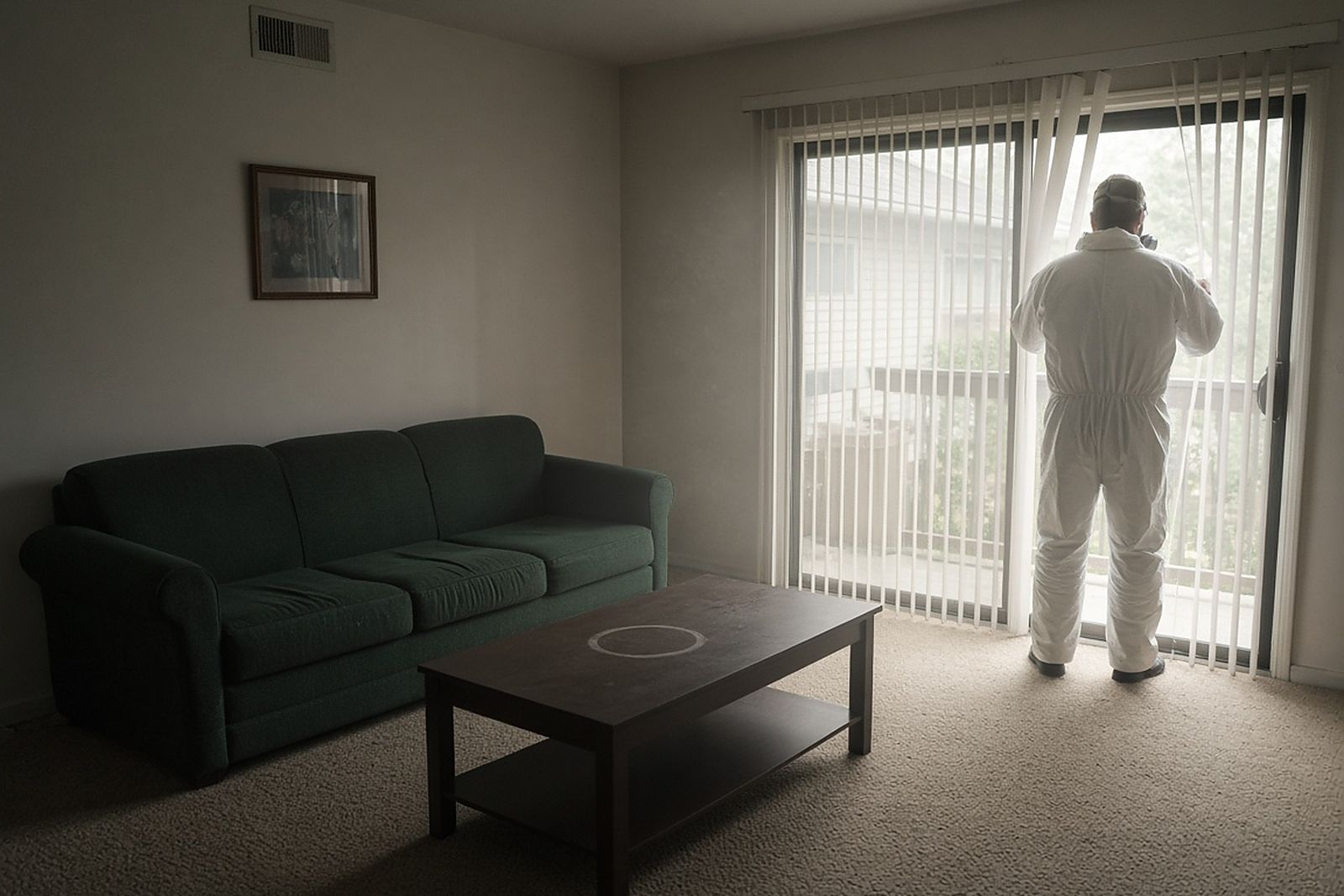
A supervisor typically starts outside, reviewing any police paperwork and asking the owner what they know about the incident. The walkthrough then covers each part of the building in protective equipment.
- Agent type: CS, OC or a combination, which affects cleaning chemistry and the nature of residue.
- Delivery method: canisters, projectiles or spray, and where each entered the building.
- Distribution: rooms directly hit, rooms that received drift and any shared stairwells or units.
- HVAC status: whether the system ran after the deployment and may have spread residue through ducts.
- Physical damage: broken windows, damaged doors, holes in drywall and burn marks from pyrotechnic canisters.
- Contents: soft goods, food, medications, children's items and electronics that absorbed or were coated by residue.
- Cleaning plan: which alkaline solutions or detergents will be used and their own hazards.
Respiratory and eye protection
Eye and airway protection go together on tear gas jobs, because the agent attacks both. Full-face air-purifying respirators are common because they cover the eyes while filtering the air. Cartridges are chosen based on the assessment, often combining particulate filtration with protection against organic vapors.
The stakes are real even for healthy adults. A 2014 study in Military Medicine by Hout and colleagues found that among 6,723 US Army recruits, the risk of acute respiratory illness was 2.44 times higher after mandatory CS exposure than in the training period before it. Cleanup exposures are usually lower than training chambers, but disturbing heavily coated materials can briefly raise levels in a closed room.
NIOSH has documented how serious higher airborne levels can become. Its 1994 documentation sets the immediately-dangerous-to-life-or-health level for CS tear gas at 2 mg per cubic meter of air. When a deployment was recent or a building remains closed and heavily contaminated, supervisors should consider whether air-purifying respirators are adequate or whether a higher level of protection is needed. OSHA's respiratory protection standard requires medical evaluation, fit testing and training for every wearer.
How do crews protect their skin from residue?
Skin exposure is often what technicians notice first. Residue on the neck, wrists or face can burn and redden, especially when sweat mixes with it. With CS, skin contact matters as much as breathing.
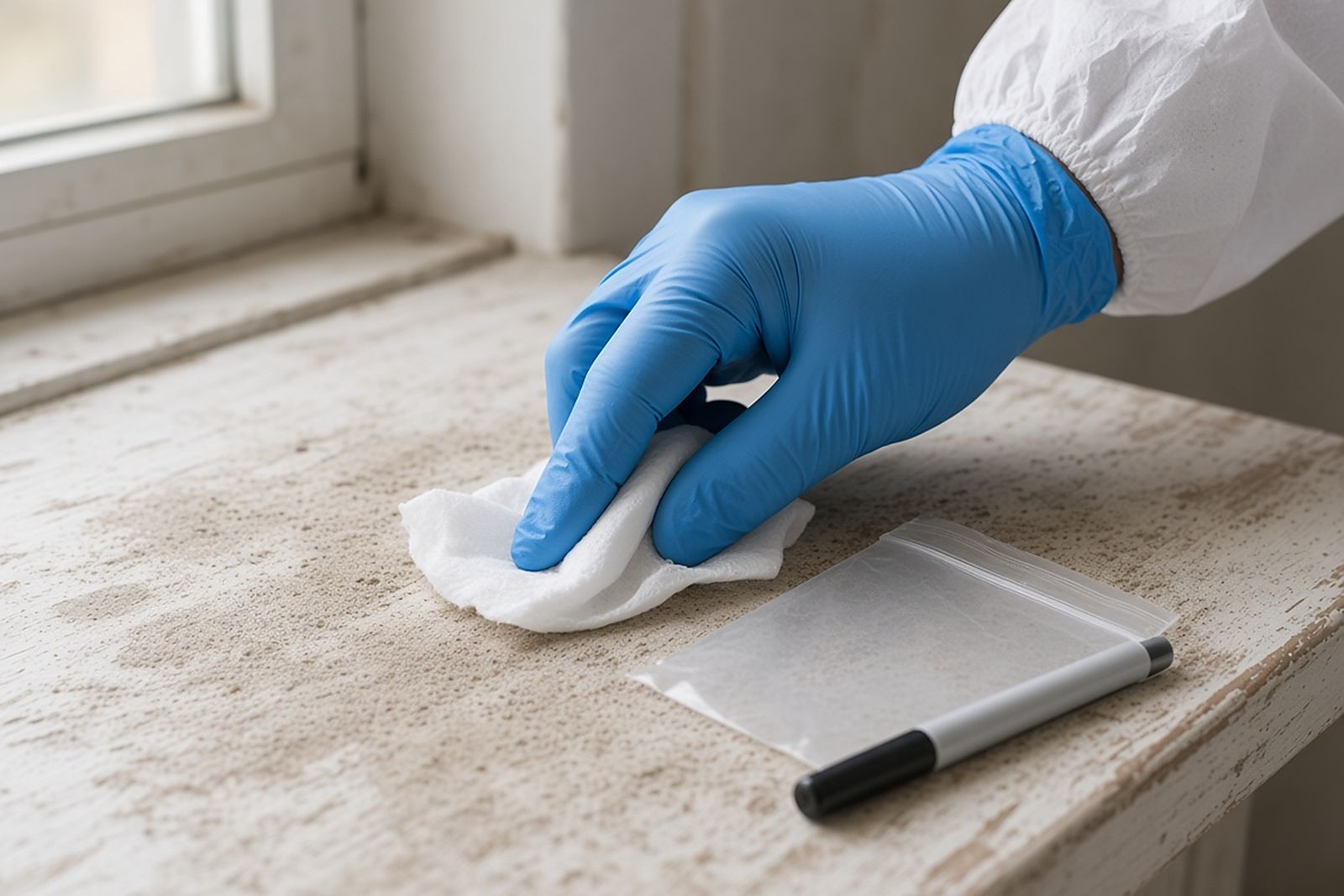
Disposable coveralls with attached hoods cover clothing and most exposed skin, and taping cuffs to gloves and boots closes common gaps. Nitrile gloves protect hands during wiping, with heavier chemical-resistant outer gloves added when technicians handle wet cleaning solutions for long periods. Boot covers or washable boots keep residue from tracking out.
Technicians are trained not to touch their faces, adjust respirators with contaminated gloves or wipe sweat with sleeves. Those small habits make a big difference in how comfortable the work remains over a long day.
OC residue deserves a separate mention. Pepper-based agents leave an oily film that clings to skin and gloves and smears rather than wiping away cleanly. Crews working in OC-affected rooms tend to change outer gloves more often, because a glove that has picked up oily residue will simply spread it to the next surface or to a respirator strap.
Glass, damaged materials and other physical hazards
Tear gas deployments often come with physical damage. Canisters or projectiles may break windows, and forced entry can splinter doors and frames. Broken glass may be scattered across floors and embedded in carpets and upholstery.
Cut-resistant gloves and puncture-resistant footwear help protect against glass and damaged materials. Where a pyrotechnic canister landed, there may be scorching or melted material that needs careful removal. Supervisors also check for damaged wiring near impact points before technicians work nearby.
Crews should confirm that no unspent munitions or canisters remain before starting. If anything unfamiliar is found, work stops and the responding agency is contacted. Cleanup technicians should never handle or dispose of police munitions.
Heat stress in hooded suits
Heat is the other physical hazard people forget. Hooded coveralls and full-face respirators are hot to wear, and homes damaged in a deployment may have boarded windows and no working air conditioning. Supervisors schedule regular breaks outside the work area, keep water available and rotate technicians between heavy scrubbing and lighter bagging tasks. Someone who is overheating is more likely to lift a respirator for a breath of air, which defeats the purpose of wearing it.
How cleaning chemistry affects protective equipment
Removing tear gas residue usually depends on alkaline cleaning solutions and detergents that help break down and lift the agent. Those products can themselves irritate skin and eyes, so PPE has to protect against both the residue and the cleaner.
The hazard communication standard requires the employer to keep safety data sheets for each product and train workers on their hazards. Gloves and suits should be compatible with the solutions in use, and eye protection remains essential when technicians are scrubbing overhead or rinsing surfaces.
Mixing products is a known danger. Training should make clear that cleaners are never combined unless the manufacturer's directions specifically allow it, and that bleach in particular should not be mixed with ammonia-based or acidic products.
Zoning a house by exposure level
PPE does not have to be identical in every room. Split-level and multi-story homes show this well. When rounds are fired into an upper floor and the HVAC system keeps running for a day because nobody knew to turn it off, stinging eyes can reach all the way to the basement.
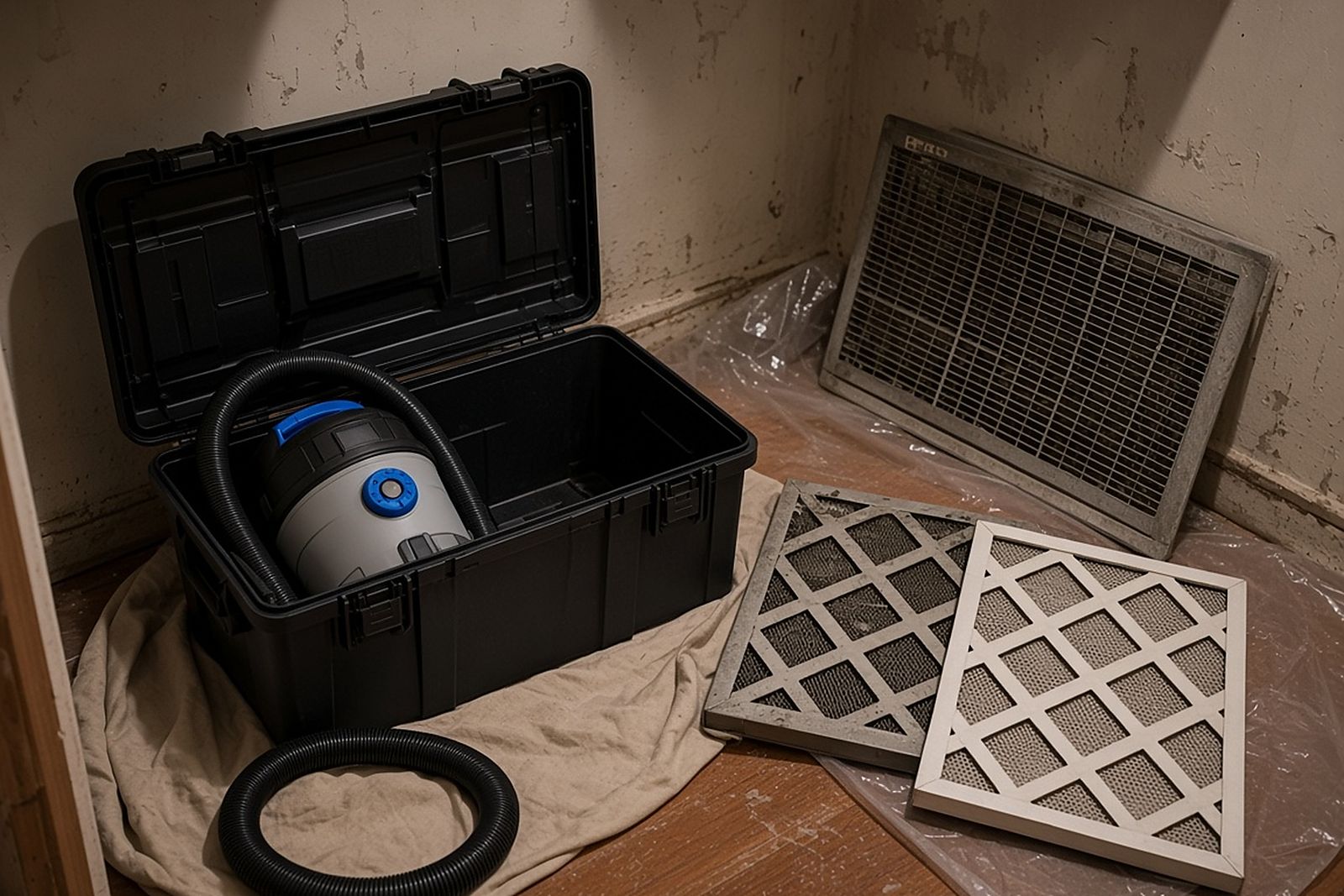
A supervisor's assessment divides a home like that into zones. Upper-floor bedrooms, where canisters landed and glass broke, call for full-face respirators, hooded coveralls with taped cuffs, cut-resistant gloves under nitrile and puncture-resistant boots. A main floor that received drift needs the same respirators and coveralls but lighter gloves. In the basement and mechanical room, where the crew opens the air handler and cleans ducts, heavier gloves and long sleeves under coveralls guard against sharp duct edges.
Plans also change mid-job. A technician who notices skin irritation at a wrist where tape has loosened should stop, retape and add a sleeve cover before continuing. Adjusting to each area and task, rather than dressing once for the whole day, is what a good PPE plan looks like in practice.
How do crews remove gear without spreading residue?
Tear gas residue transfers easily, so doffing procedures are critical. Crews set up a removal area near the exit, with bags for disposable gear and water or wipes for cleaning reusable equipment. Outer gloves come off first, followed by coveralls rolled inside out, then eye protection and respirators, then inner gloves and a thorough wash of hands and face.
Reusable respirators and boots are cleaned before they go into vehicles. Contaminated clothing, if any, is bagged separately. These steps protect technicians' families and prevent residue from reaching clean areas of the property.
Families returning home should also be careful. Until the crew confirms that cleaning is complete, avoid touching surfaces, sitting on upholstery or handling clothing from affected rooms. Food businesses should ask their local health department about any inspection before reopening, and landlords should confirm what notice tenants need before reoccupancy.
PPE questions to ask a cleanup company
A few direct questions show whether a company plans protection around the conditions in your building.
- Will you write a hazard assessment covering each area of the building?
- Which respirators and cartridges will your crew wear, and are technicians fit tested?
- How will you protect technicians' skin, given how readily CS irritates skin?
- How will you handle broken glass and damaged materials?
- Which cleaning products will you use, and does your PPE hold up against them?
- Where will crews remove gear, and how will contaminated items leave the property?