Short answer
OSHA protects the workers who remove tear gas residue from a home or business. CS tear gas has a federal limit on how much workers may breathe. Crews working in rooms coated with residue fall under OSHA rules for respirators and protective gear. They also fall under chemical safety rules for the cleaning products they use. OSHA does not certify that your home is clear. So you should also ask how the company checks the result.
Why OSHA matters when the tear gas is in your house
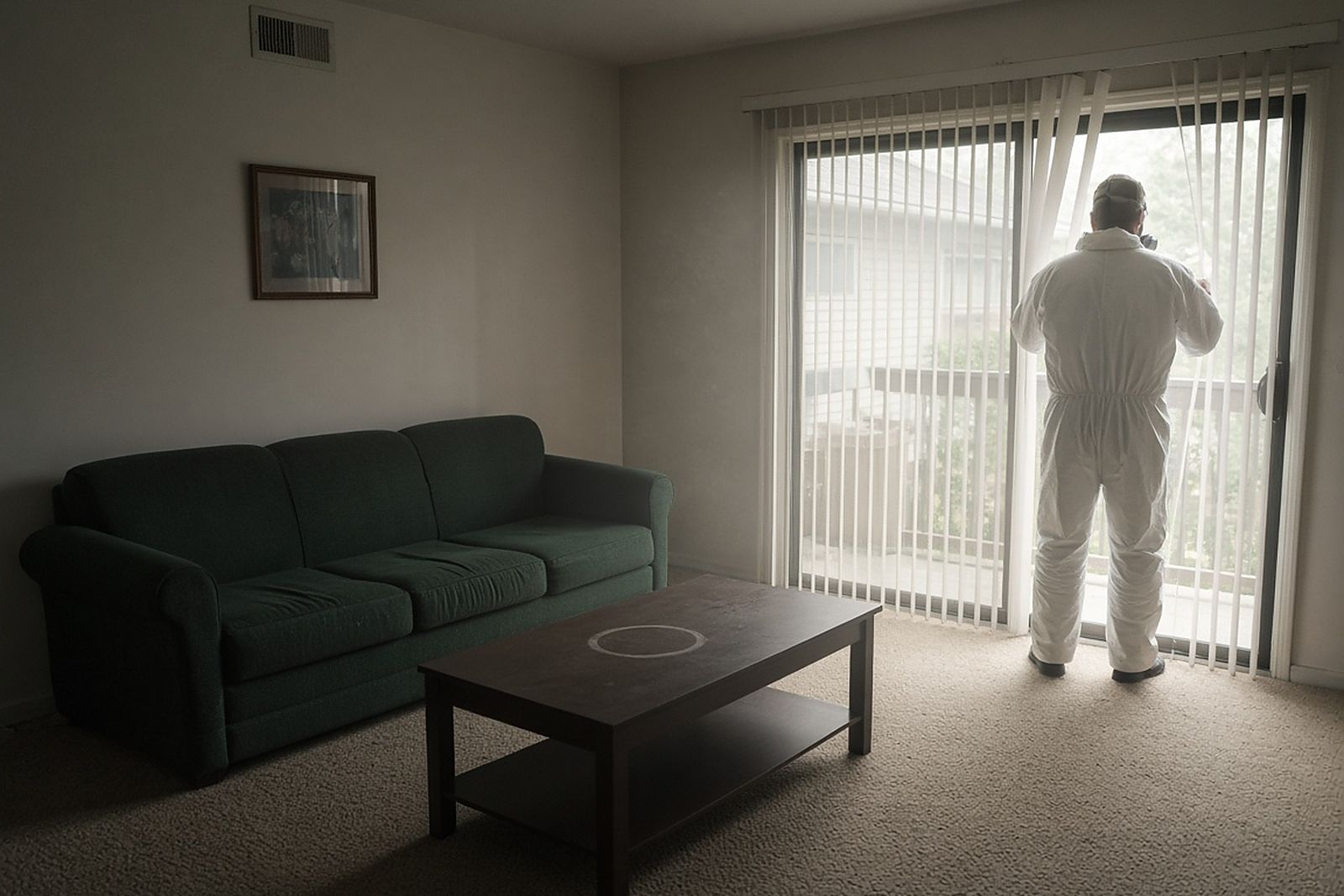
After police use CS or OC (pepper) agents inside a home or business, a fine, stinging residue is left behind. It coats surfaces, soaks into fabrics and spreads through the ducts. The people who come to remove it are workers doing dangerous work. OSHA sets the rules for how their employer protects them.
OSHA does not inspect your house or decide when it is safe to live in. Its rules focus on the crew. They cover how much of the agent workers may breathe, what they wear and how they are trained. They also cover how workers handle the chemicals used to neutralize and clean the residue. A company that follows those rules with care tends to plan the job with care as well.
You may run a business and be thinking of asking your own staff to wipe down after tear gas was used. If so, OSHA may apply to you directly. Your workers would be exposed to an irritant with a set federal limit. That is not a task to hand out lightly.
Is there a federal exposure limit for CS tear gas?
Yes. CS, the chemical most people mean by "tear gas," has published limits for workers. The NIOSH Pocket Guide, updated in 2019, sets NIOSH's recommended limit for CS as a ceiling of 0.05 ppm (0.4 mg/m³), with a skin notation. A ceiling is a level that should never be passed. OSHA's permissible exposure limit (PEL) is the same value, averaged over a work shift.
Two parts of that matter for cleanup crews. The skin notation means the chemical can soak in or cause harm through the skin, not only through breathing. So gloves and full body coverage are a must. And because there is a PEL, employers are expected to keep worker exposure below it. They do this with fresh air, safe work habits and respirators as needed.
A few days after police use tear gas, the residue in a home is usually far below the levels in the air during the event. But disturbing heavily coated surfaces, carpets and ducts can put particles back into the air. That is why crews plan breathing protection before they start.
Five OSHA standards that shape the job
Several general OSHA rules work together on these jobs. A qualified company should be able to tell you how each one shapes the plan for your property.
- Air Contaminants, 29 CFR 1910.1000: the table that holds the permissible exposure limit for CS.
- Respiratory Protection, 29 CFR 1910.134: a written program, medical checks, fit testing and choosing the right cartridges for respirators worn during cleanup.
- Personal Protective Equipment, 29 CFR 1910.132: a written review of dangers that explains the choice of suits, gloves and eye protection. This matters even more given the skin notation for CS.
- Hazard Communication, 29 CFR 1910.1200: labels, safety data sheets and training for alkaline cleaners, soaps and other products brought on site.
- The General Duty Clause: a catch-all for known dangers that no other rule covers. Examples are broken glass from the police entry, broken doors and getting too hot in a suit.
Respirators, skin protection and the cleaning chemicals
Tear gas residue acts differently from many other messes. It is a solid irritant that clings to surfaces and settles into soft materials. It becomes active again when disturbed. Vacuuming carpets, taking down curtains or running the air handler can release enough particles to cause burning eyes, coughing and skin irritation.
Under the breathing protection rule, the employer must choose respirators that fit the danger. It must give a medical check to workers who wear them and fit test each worker. Full-face respirators are common on these jobs because they protect the eyes as well as the lungs. But the choice should come from the written review, not from habit.
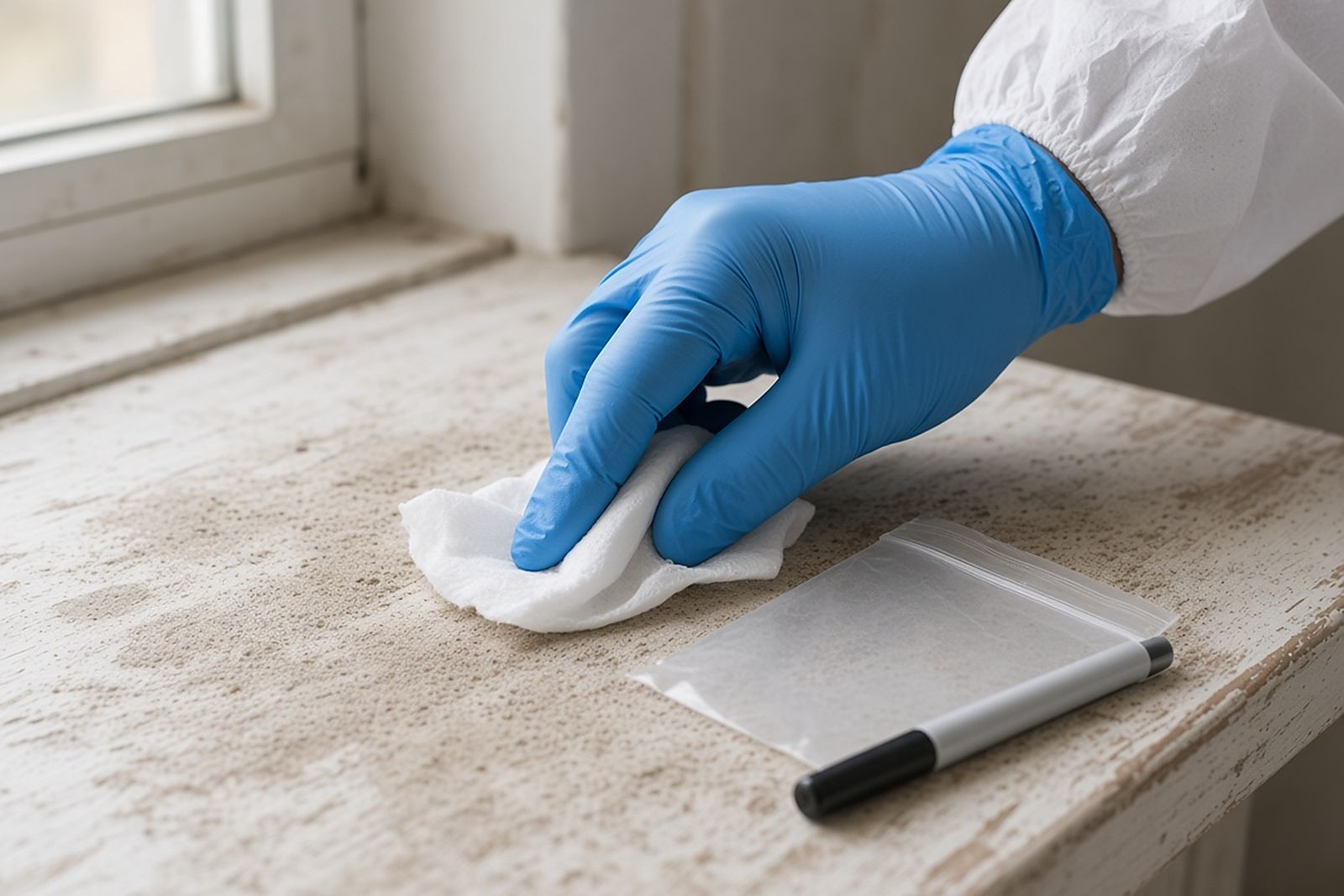
Skin protection deserves the same attention. Workers who reach overhead or wipe walls can get residue on the neck, wrists and face. Chemical-resistant gloves and hooded coveralls help. So does taking gear off carefully at a set spot outside the work area. These steps keep irritants off skin and out of vehicles.
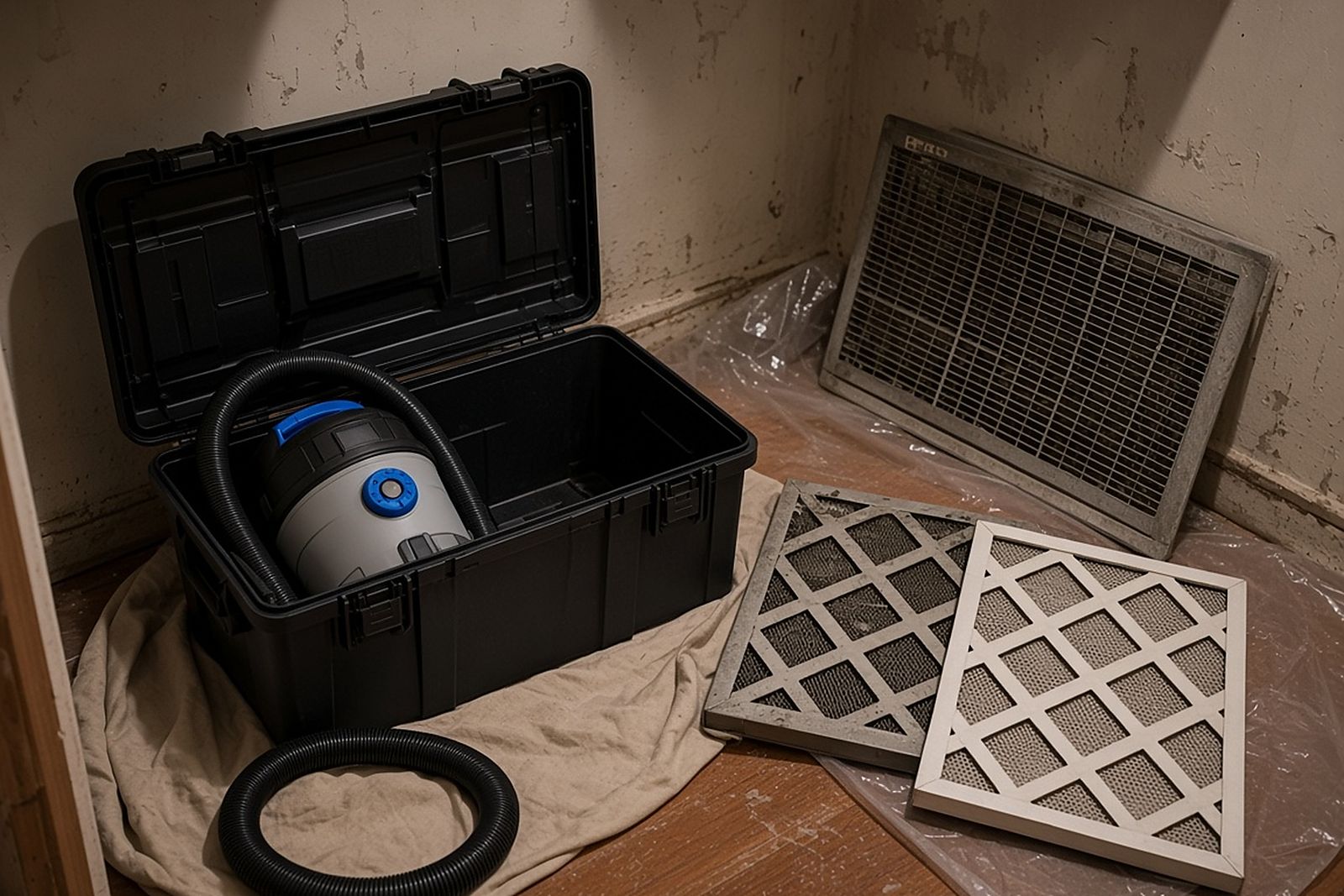
Respirators are the last line of defense, not the first. OSHA expects employers to lower exposure through equipment and safe work habits where they can. On a tear gas job, that often means keeping the building's heating and cooling system off. Crews set up air filters and plastic walls that keep dust inside the work area. They work from the top of a room down. They bag soft items right where they remove them, so residue is not carried through clean spaces.
Neutralizing CS usually relies on alkaline (high-pH) solutions and soaps, not plain water.
Those chemicals are useful, but the products that carry them can also irritate skin and eyes. The chemical safety rule requires the employer to keep safety data sheets for each product. It must label containers correctly and train workers on the dangers. Mixing products that react with each other is a known danger that training should cover. This is most true for anything with bleach mixed with ammonia-based cleaners.
Ask the company for a list of the products it plans to use. If family members have asthma, chemical sensitivities or young children, share that. Then the crew can plan rinsing and fresh air to match.
A bakery below a standoff
Take a neighborhood bakery as an example. A police standoff at an apartment above the bakery ends after officers fire tear gas into the unit. Some of the agent drifts through a shared stairwell and into the bakery's back room and storage area. The next morning, staff notice stinging eyes and a sharp smell when the vent fan turns on.
The owner thinks about having her workers scrub everything before opening. Instead, she keeps the bakery closed, turns off the fan and calls a residue cleanup company. The supervisor explains the plan. The crew will wear fit-tested respirators and chemical-resistant suits. They will remove and throw out open food and packaging that was exposed. They will use alkaline cleaners on hard surfaces. Then they will replace filters and clean the ducts they can reach.
The bakery is an employer. So sending untrained staff into the residue would have exposed them to an irritant with a federal limit. This bakery is made up. But it shows how OSHA duties can land on an everyday business that had nothing to do with the event.
What state and local rules can add
States that run their own OSHA-approved plans may add rules for employers in their state. Food businesses may also need to pass local health inspections before reopening. Landlords may have duties to tenants under state laws on homes being fit to live in. Some cities have a process for claims when police actions damage private property. Those processes can have short deadlines.
Property managers deserve a special note. Maintenance staff hired by a landlord or management company count as workers under OSHA. Sending them into a gassed unit to pull carpet or change filters puts the employer in the same position as a cleanup company. Your maintenance team may not have been trained, fitted and equipped for irritant residue. If so, the safer choice is to keep them out until a specialist finishes.
If your state runs its own OSHA plan, that state agency's advice office can explain what it adds. A company that knows your area should know which agencies usually get involved after police use tear gas. It should also know what papers they tend to ask for.
Protecting your household, and seven questions for the contractor
Stay out of affected rooms until the crew finishes. Keep children, older relatives and pets somewhere else. If anyone in your home still has symptoms such as eye pain, coughing, wheezing or skin irritation, contact a doctor or clinic. Don't wait for the cleanup to end.
Take photos of damage and residue before work begins, if you can do so without going into soiled rooms. Keep every paper the company gives you. Those records support insurance claims and any claim against a government agency. They also give you peace of mind once the home is back in use.
Before any crew starts work in your home or business, a few questions will show whether its safety program is real.
- Have you written a review of protective gear needs for CS or OC residue in this building?
- Are workers medically cleared and fit tested for the respirators they will wear?
- Which cleaning products will you use, and may I see their safety data sheets?
- How will you handle heating and cooling parts, filters and ducts without spreading residue?
- How will soiled soft items be bagged and removed?
- How will you check the result, for example with walk-through checks for stinging or odor, and will you write it down?
- Do you carry workers' comp and liability insurance?