Free tear gas residue cleanup tool
Tear Gas Residue Cleanup DIY or Call a Pro? Risk Check
Eight yes-or-no questions that produce a risk level and explain when professional help is the safer choice.
Some tear gas situations are ones a careful person can handle. One example is a light drift through an open window. It might leave a faint film on hard kitchen surfaces and no lasting irritation. Far more situations only seem manageable. Then the home vacuum blows residue through every room, or the mop smears it into the grout. This risk check asks a short set of yes or no questions. Was the gas used indoors, or did it come in from outside? Did the air system run? Were carpet and padded furniture exposed? Do symptoms come back when you go in? Do children, older adults, people with asthma, or pets use the space? Is the building shared? Do you know which gas was used? Might blood or body fluids also be present?
Your answers give a risk level. It explains which factors drove it and why professional help is the safer choice at that level. The check cannot see your home or test your air. It reasons from how these gases behave. Soft materials hold residue for a long time. Ducts spread residue without anyone noticing. Symptoms when you go in mean residue is still there. And people at higher risk leave little room for error. When the result points to a provider, take that reasoning into your call. When it allows a limited do-it-yourself approach, it still expects a HEPA vacuum, not a home vacuum. It expects gloves and eye protection and no mixing of products. You must also be honest and stop if irritation comes back. Run the check again as you learn more. Finding out that the air system was on changes everything.
How to use it
- 1Answer each question from what you actually know, choosing unsure when the agent or HVAC status is unclear.
- 2Pay attention to the HVAC, soft goods, and symptoms-on-entry questions, which weigh heavily in the result.
- 3Read the risk level and the explanation of which factors moved it.
- 4If the result points toward professional help, open the planner and vetting checklist. If it allows you to do it yourself, follow the safety notes with no shortcuts.
Prefer to ask a person?
Your request is sent to the follow-up inbox. A coordinator can reply by email. Not for emergencies; call 911 first if anyone is in danger.
Check whether DIY is safe
Tear Gas Residue Cleanup: DIY or call a pro?
Eight yes-or-no questions. The result is an educational risk level, not a safety clearance.
1. Is there blood, body fluid, or anything that could carry a bloodborne pathogen?
2. Has the material soaked into carpet, padding, a mattress, drywall or a subfloor?
3. Is there a strong or lingering odor?
4. Could needles, broken glass, drug residue or unknown chemicals be present?
5. Does the affected area cover more than a small spot, or more than one room?
6. Will children, older adults, pregnant people or anyone immunocompromised use the space afterward?
7. Do you need documentation for insurance, a landlord, a sale, or an estate?
8. Would you be doing this while grieving, exhausted or under time pressure?
8 questions left to answer.
A worked example
Here is a made-up renter. His ground-floor apartment is across the street from a corner where police used gas to break up a crowd. He had left one bathroom window open a crack. When he comes back, he notices a faint peppery smell in the bathroom and hallway. But his eyes do not sting. The window air conditioner in the bedroom was off all evening. He runs the risk check. He answers that the gas came from outside and that the air system did not run. The bathroom has tile and a washable bath mat. He has no symptoms when he goes in. He lives alone with no pets, in a building with many units. He does not know which gas was used, and no blood or body fluids are involved. The tool gives a lower risk level. It explains that the hard bathroom surfaces near the window may be cleanable by a careful person. That person should use gloves, eye protection, and a suitable cleaner. The bath mat and the hallway runner should be bagged, not shaken out. A home vacuum must not be used. It also notes that the shared building and the unknown gas are reasons to tell management. He should stop and call a provider if any irritation starts or the smell lasts after cleaning.
Numbers behind diy risk check decisions
- 86.1%
86.1% reported health issues in the days following exposure.
Read with care: Self-report and selection bias; protest exposure cannot establish residential re-entry conditions.
Source: Torgrimson-Ojerio et al. (2021)2,257 self-selected adults reporting exposure in Portland; July–August 2020 survey.
- RR 2.44
Among 6,723 US Army recruits, the risk of acute respiratory illness was 2.44 times higher after mandatory CS exposure than in the training period before it.
Read with care: Young healthy adults with brief controlled exposure; effects in children or elderly residents may differ.
Source: Military Medicine (Hout et al.) (2014)Fort Jackson, South Carolina recruits, August–September 2012
- 8.7% severe
Of 9,261 documented tear gas and pepper spray injuries, 8.7% were severe enough to require professional medical management and 17% were moderate.
Read with care: Severity depended heavily on enclosed spaces, prolonged exposure and high agent quantities.
Source: BMC Public Health (Haar et al.) (2017)Worldwide published cases, 1990–2015
- 14 mg/m³ for 1 hour
NIOSH notes that CS exposures above 14 mg/m³ for one hour produced extreme irritation, redness and blistering of volunteers' skin.
Read with care: Concentrations in a home after a deployment are rarely measured, so this is a reference point, not a typical residential level.
Source: NIOSH (CDC) (1994)Human volunteer data summarized by NIOSH
These figures are public research and agency data, not this network's own job records. Keep each number with its population, year and limits; none of them predicts cost, timing or outcome at a specific property.
DIY or Call a Pro? Risk Check questions for tear gas residue cleanup
Why does the presence of carpet or a couch matter so much?
Soft materials hold residue deep inside fibers and foam. Wiping cannot reach it there. Every step or sit releases a new dose. These items are the reason symptoms return after a room looks clean. A home approach cannot pull residue out of padding or cushions. Store-bought carpet machines push it deeper. The check raises the risk level whenever soft items were exposed. Those items usually need a professional check or replacement.
What if I do not know whether the HVAC ran?
Choose unsure. The check will treat it as if the system ran, because guessing wrong means a building that gets soiled all over again. You can often find out by checking the thermostat schedule or asking anyone who was there. You can also look at the filter for a visible film. If there is any sign residue reached the return vents, the job is beyond a do-it-yourself approach, no matter how the rest of the space looks.
If the check allows DIY, what does safe handling look like?
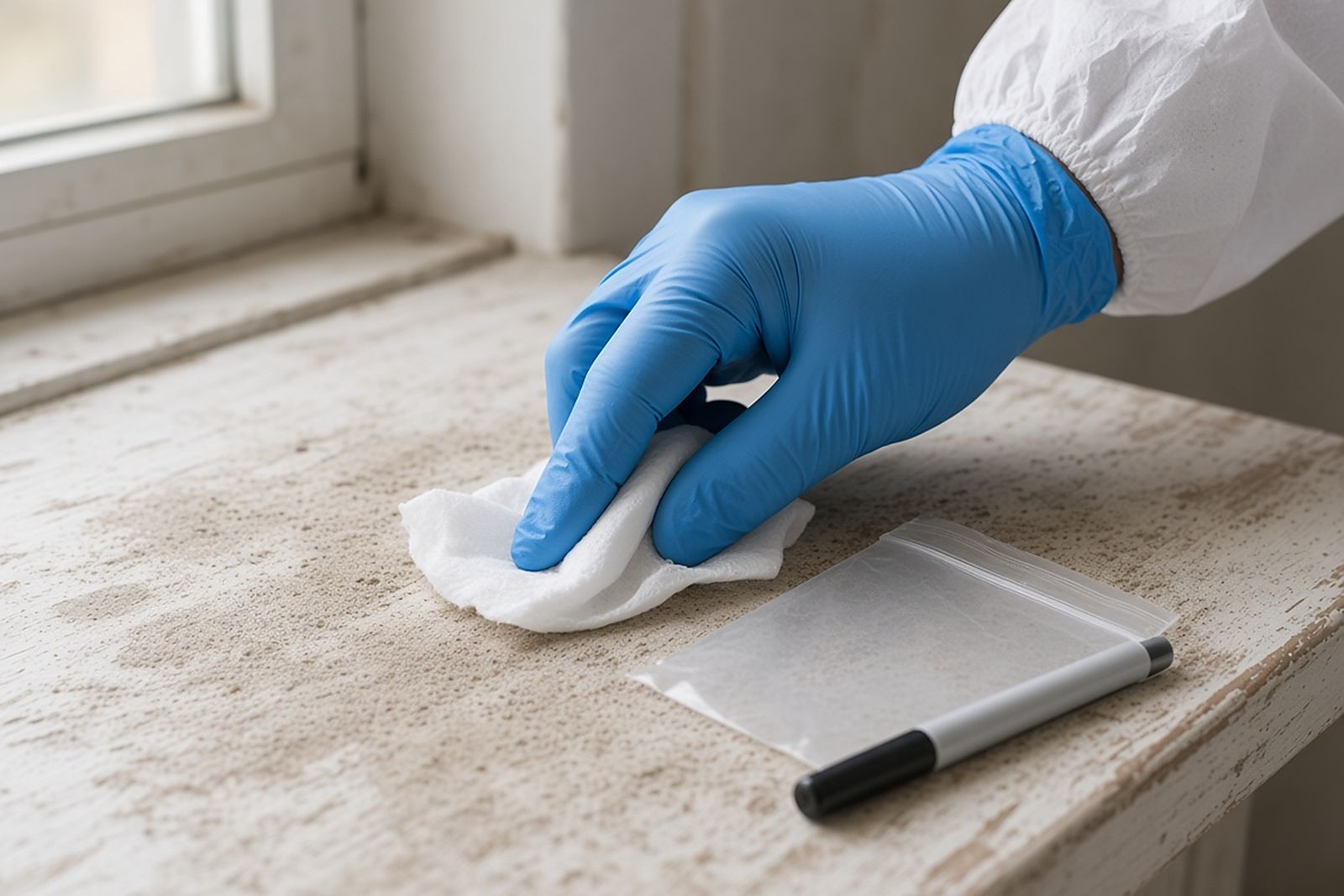
Wear gloves, eye protection, and a respirator rated for particulates, not a dust mask. Use a vacuum with true HEPA filtration to lift settled particles from hard surfaces before any wet cleaning, then wipe with a cleaner compatible with the agent, changing cloths often. Bag textiles in place rather than shaking them. Never mix products, never use bleach on OC residue, and stop if your eyes or throat begin to sting. Check local rules before disposing of anything.
Why does a shared building raise the risk level?
Because what you do affects your neighbors. Vacuuming, sweeping, or carrying fabrics through a hallway can move residue into units that were never exposed. Shared return vents can carry it through the whole building. In a building with many units, management and maybe an owners' group control shared systems. They may need to arrange a provider. The check flags this so you tell the right people before you do anything in the space.
What should I do if I started cleaning and symptoms got worse?
Leave the space, remove and bag the clothing you were wearing, rinse your eyes and skin with clean water, and do not go back in to finish. Worsening symptoms mean residue was disturbed and is now airborne. Photograph the current state from the doorway and note what products and tools you used, because a provider will need that information to plan. Seek medical care if breathing difficulty or persistent eye pain develops.
Should I run the check again after I start cleaning?
Yes, especially if anything changes. You might discover residue in a closet, notice that the HVAC ran longer than you thought or find that someone in the household reacts more strongly than expected. Rerun the check with the updated facts. If the result moves toward professional help, stop and call a provider rather than pushing on. The check is most useful when it reflects what you actually know now.
What if members of my household disagree about doing it ourselves?
Use the check's results as a shared starting point, and give extra weight to anyone with asthma, allergies, young children or pets, since they face the highest risk. If one person feels unsafe, that matters. A provider's inspection can settle the question with an outside opinion. Doing part of the work yourselves and hiring help for soft goods or HVAC is often a reasonable compromise.
Related community polls
Every count is a real visitor vote; nothing is seeded or padded. One vote per poll per device, and you can change your answer.
How did tear gas end up in your building?
What was the first thing you tried to reduce the irritation?
Other tear gas residue cleanup tools
Cost Range Estimator
Set the affected area, surface types, severity and extras to see an educational cost range and the factors that move it.
OpenProvider Vetting Checklist
Fifteen questions to ask any remediation provider, a readiness score, and a copyable list of what is still unanswered.
OpenInsurance Claim Organizer
A guided checklist from finding the policy to tracking the carrier decision, with a printable summary of where the claim stands.
OpenFirst 24 Hours Planner
Tell the planner a few facts about the situation and get an ordered list of who to call, what not to touch, and what to photograph.
OpenWaste & Disposal Classifier
Five questions about the material point to the likely waste category and which authority to confirm the rules with.
OpenMore on tear gas residue cleanup
Tear Gas Residue Cleanup services
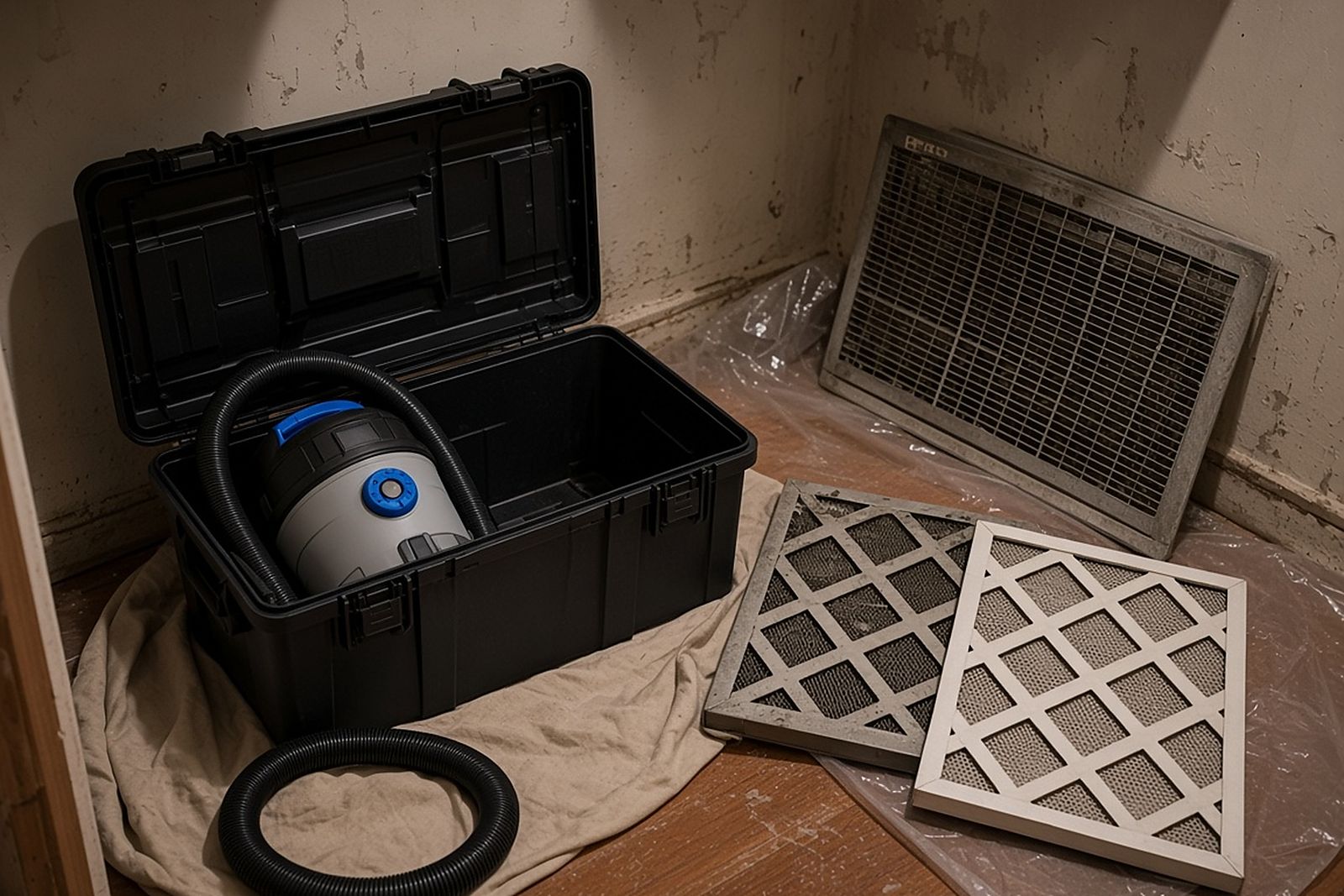
Learn what professional tear gas cleanup involves. It covers HEPA removal, the right chemicals, air system checks, choices about soft items, and safe return checks.
Costs explained
What drives the price, published cost ranges, and how to read a written quote line by line.
Insurance and payment
Which policies may respond, how to document a claim, and what to do if coverage is denied.
Community polls
Compare your experience with other tenants, owners, and managers who dealt with tear gas residue. See which choices they found hardest afterward.
Knowledge quiz
Check what you know about how CS and OC residue behaves, why the air system matters, and what a thorough cleanup and its records should include.
Articles and resources
Read articles on how tear gas acts in buildings, lessons from home and business cleanups, and how cleanup methods keep changing.
Field guides
Read detailed guides on where residue hides, breaking it down versus cleaning it, who does what as landlord or tenant, and what a written cleanup plan should say.