Short answer
Research tear gas cleanup waste by stream. Spent canisters and projectiles belong to the police and should not be handled. Contaminated soft goods, exposed food, filters, duct sections, broken glass and PPE usually go through ordinary solid waste channels, bagged and sealed, but state and local rules decide the details. Alkaline wash water may need sewer approval. Document everything for insurance and any agency claim.
Is there an EPA rule for tear gas cleanup waste?
Not a specific one. Federal waste law does not include a category written for residue from CS or OC agents in a home. Most tear gas cleanup waste is managed as solid waste under state and local rules, with extra care in how it is packaged so residue does not escape during handling and transport.
That does not mean the question is simple. A single cleanup can produce very different materials, from spent munitions to mattresses to wash water, and each one may follow a different path. The cleaning chemistry adds another consideration, because alkaline solutions used to break down CS can affect what a sewer system will accept.
The practical approach is to identify each stream, then ask the agency or facility responsible for that stream what it requires. Rules vary by state and county; verify with the local authority.
Eight waste streams a tear gas cleanup produces
A walkthrough with your cleanup contractor should identify most of the waste the job will create. These are the streams that come up most often.
Not every exposed item has to become waste. Hard goods such as dishes, metal furniture, sealed electronics and many plastics can often be cleaned, and some clothing and linens can be laundered successfully with repeated washes. Deciding what to clean and what to discard is part of the contractor's assessment, and it has a direct effect on how much waste leaves the property. Ask for the reasoning behind each discard decision so that nothing is thrown away simply because it was faster.
- Spent canisters, projectiles and munitions components left after the deployment.
- Soft goods that cannot be cleaned: mattresses, pillows, upholstered furniture, rugs, curtains and some clothing.
- Exposed food, beverages, medications, toiletries and personal care items.
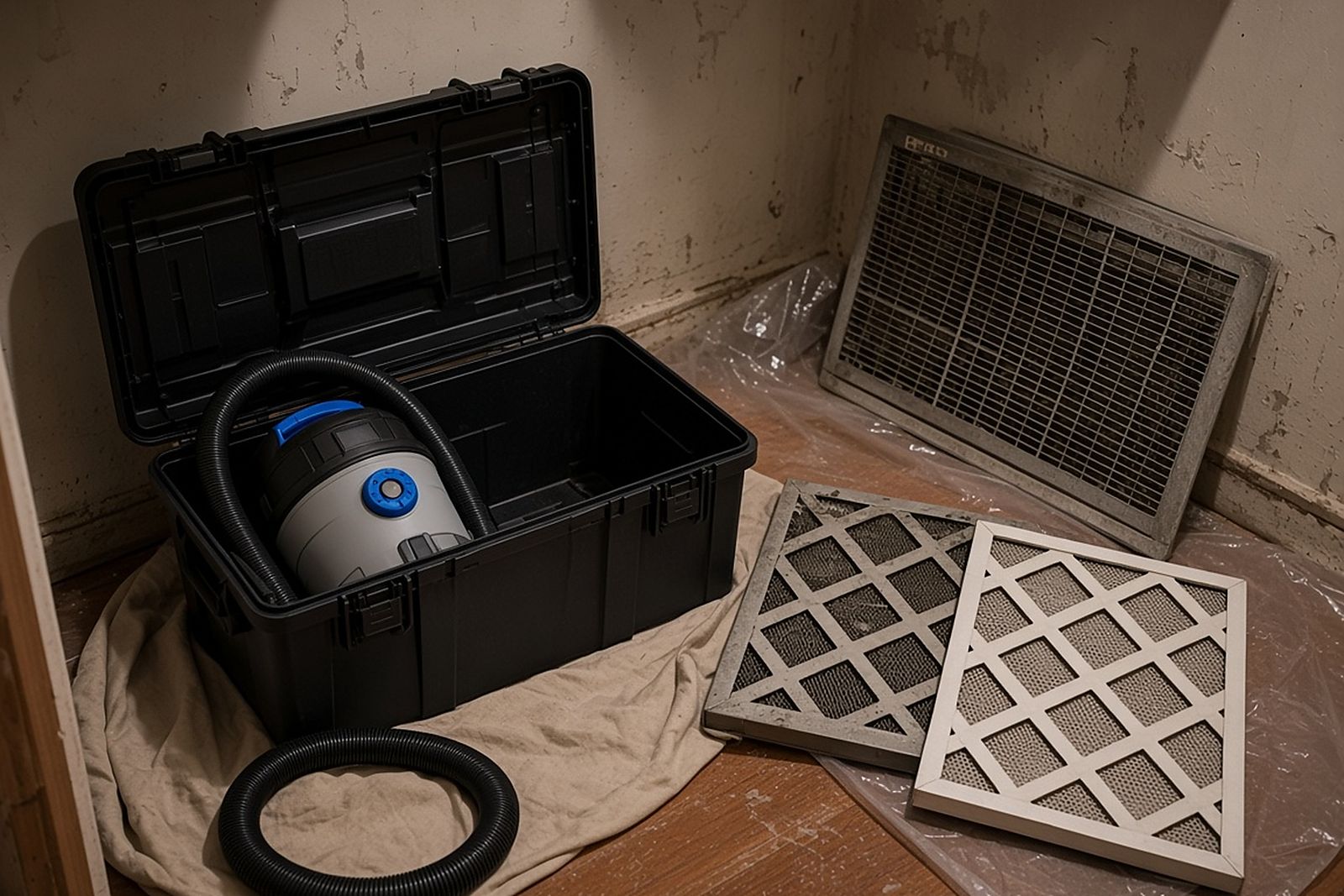
- HVAC filters, disposable duct sections and insulation from the air handling system.
- Broken glass, splintered wood and debris from forced entry or projectile impacts.
- Scorched or melted materials where pyrotechnic canisters landed.
- Wash and rinse water containing residue and alkaline or detergent cleaning solutions.
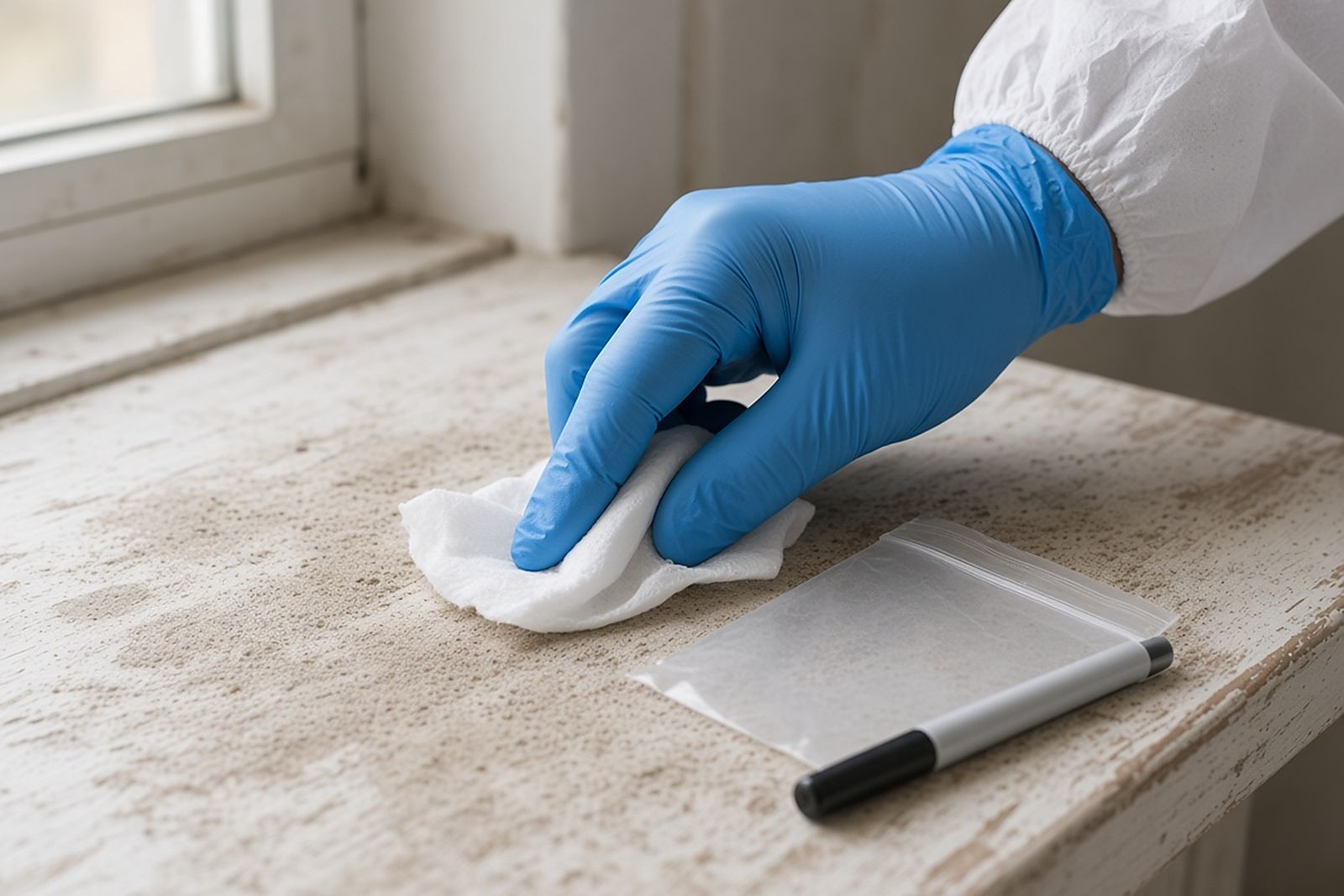
- Used PPE and cleaning supplies: suits, gloves, cartridges, wipes and mop heads.
Spent canisters and munitions stay with the agency
Canisters, projectiles and other munitions components belong to the deploying agency and may be evidence. They can also still contain active agent or, in rare cases, unexpended material. Cleanup crews and homeowners should not pick them up, move them or throw them away.
If you find any after officers leave, keep people away from the item, photograph it from a distance if safe and contact the agency's non-emergency line to request retrieval. Note the date, time and name of the officer who responds.
Documenting the presence and location of canisters also supports insurance and government claims, because it helps show where agent was released inside the property.
Bagging and disposing of contaminated soft goods
Soft goods absorb tear gas residue deeply, and some cannot be cleaned effectively. Contractors typically bag these items in heavy plastic at the point of removal, seal the bags and label them so they are not reopened by someone unaware of the contents. Large items such as mattresses and sofas may be wrapped in plastic sheeting before being carried out.
In most areas, sealed bags and wrapped items can go to a landfill or transfer station as ordinary solid waste. Some facilities may ask about the contents, and some municipal bulk pickup programs may not accept items identified as chemically contaminated. Your contractor should confirm acceptance before hauling.
Before anything is discarded, make sure it has been photographed and inventoried. Insurers and government claims offices typically want to see what was lost, and once an item goes to the landfill, that evidence is gone.
HVAC filters and removed duct sections should be bagged at the air handler rather than carried through the home. Shaking or tapping a loaded filter can release a burst of residue into rooms that were already cleaned.
Exposed food, medications and personal care items
Open food, produce, pet food and beverages in rooms reached by tear gas are generally discarded, along with items in permeable packaging. Sealed cans and glass jars may sometimes be cleaned and kept, depending on the contractor's assessment and any local health guidance.
Medications should not simply be thrown in the trash. Exposed prescriptions can be replaced through a pharmacy, and the old ones taken to a drug take-back kiosk or program. Toiletries, cosmetics, toothbrushes and similar items that were open in affected rooms are usually discarded.
For restaurants and other food businesses, the local health department may have specific instructions about food disposal and documentation before reopening. Ask before discarding large quantities, and keep a written list for your insurance claim.
Pet supplies deserve the same attention. Open bags of pet food, chew toys, bedding and litter in affected rooms can hold residue that irritates animals, who spend their time close to floors and groom residue from their fur. Replacing these items is usually simpler than trying to clean them.
Can wash water go down the drain?
Cleaning tear gas residue often relies on alkaline solutions because they speed up breakdown of the agent.
The same alkalinity can matter to a sewer utility. Many wastewater systems set limits on the pH and content of what enters the sewer, especially from commercial sources. A household mop bucket is rarely an issue, but a large-scale commercial cleanup producing significant volumes of alkaline rinse water may need approval.
Ask your contractor how much wash water the job will produce, what it contains and whether it has checked with the local utility. Properties on septic systems deserve extra caution, since strong cleaners in large volumes can disrupt the system.
Never mix alkaline cleaning solutions with bleach or acidic products in a bucket or drain to get rid of them faster. Combining cleaners can release harmful gases, which is the last thing a home recovering from a chemical deployment needs.
Waste from a gassed apartment, stream by stream
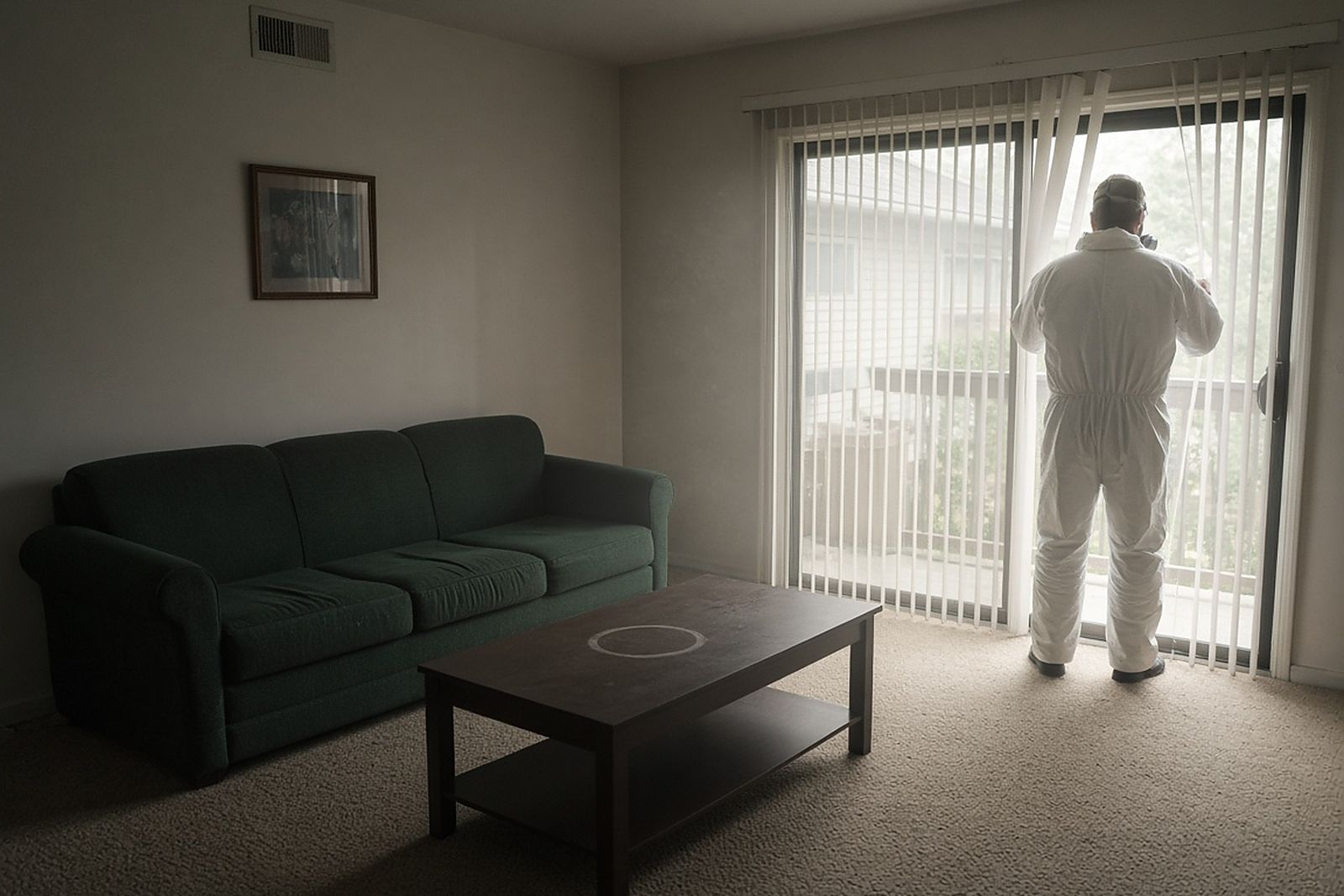
The streams separate more clearly in a concrete, illustrative case. During an arrest, officers fire tear gas into a second-floor apartment. After officers leave, the tenant finds two spent canisters on the living room floor and a broken bedroom window. The building manager arranges a cleanup contractor and asks the tenant to wait with a relative.
The contractor photographs the canisters in place and calls the police non-emergency line, which sends an officer to retrieve them. The crew then inventories and bags the tenant's mattress, sofa cushions, curtains and exposed food, wraps the sofa frame, removes broken glass into rigid containers and replaces the furnace filter. It confirms with the transfer station that sealed bags are accepted and checks with the sewer utility that its limited volume of rinse water can be discharged.
At the end, the tenant receives an itemized list of discarded belongings with photos, and the manager receives the disposal receipts. The apartment is illustrative, but the separation of streams and the documentation mirror good practice.
Why documentation matters so much
Tear gas cleanups often lead to insurance claims and sometimes to claims against the agency that deployed the gas. Both depend on proof. Photos of damaged items, inventories with approximate values and disposal receipts help establish what was lost and why it could not be kept.
Health effects can also be part of the picture. If anyone in your household sought medical care after the exposure, keep those records alongside the waste documentation, stored privately but ready if a claims office asks.
Store copies of everything in one place, including emails and letters, so you can respond quickly if an adjuster or claims office asks for more detail.
Who to check with before items leave
Use this list to confirm the rules for each stream before items leave the property.
- Deploying agency: retrieval of canisters and munitions components.
- Local solid waste authority or transfer station: acceptance of sealed contaminated soft goods and debris.
- Wastewater utility: whether rinse water may be discharged, and under what conditions.
- Local health department: food disposal and reopening requirements for food businesses and licensed facilities.
- Pharmacy or take-back program: disposal of exposed medications.
- Your insurer and any government claims office: what documentation they need before items are discarded.