Short answer
A defensible tear gas residue scope starts with the deployment facts, follows the air path through the building, sorts every material into clean, launder or discard with a stated reason, fixes the order of work so cleaned rooms are not recontaminated and ends with a documented walkthrough under normal HVAC operation. This invented duplex example shows each of those steps in practice.
The setup: a duplex, a standoff and one shared furnace
Tear gas remediation proposals can be hard to judge. The damage is mostly invisible, the chemistry is unfamiliar and two providers can describe the same house in very different ways. Walking through one fictional job from start to finish shows what a well-reasoned scope contains and why each part is there.
Every detail below is invented. No real property, family or agency is described. Treat it as a teaching tool, not a template, because your building's layout, the agent used and the length of the deployment will shape the right plan for you.
As you read, notice how often the provider writes something down. The paper trail is not bureaucracy. It is what lets an owner, a tenant, an insurer or a later contractor understand why the building was treated the way it was.
In the hypothetical, police respond to a barricaded person in the lower unit of a side-by-side duplex. Over several hours, officers deploy multiple CS canisters through a front window and a rear door. The person eventually surrenders unharmed. The upper-floor tenant in the neighboring unit was evacuated early in the event.
The two units share an attic, a basement laundry room and a single furnace in the basement that serves both sides through separate duct runs. The furnace ran throughout the standoff. The property owner lives across town and receives the call the next morning.
When the agency releases the property, the owner asks which agent was used, how many munitions were deployed and whether any were left behind. The agency confirms CS and states that it has collected spent canisters. The owner writes the answers down with the date and the name of the officer who provided them.
Tracing where the residue went
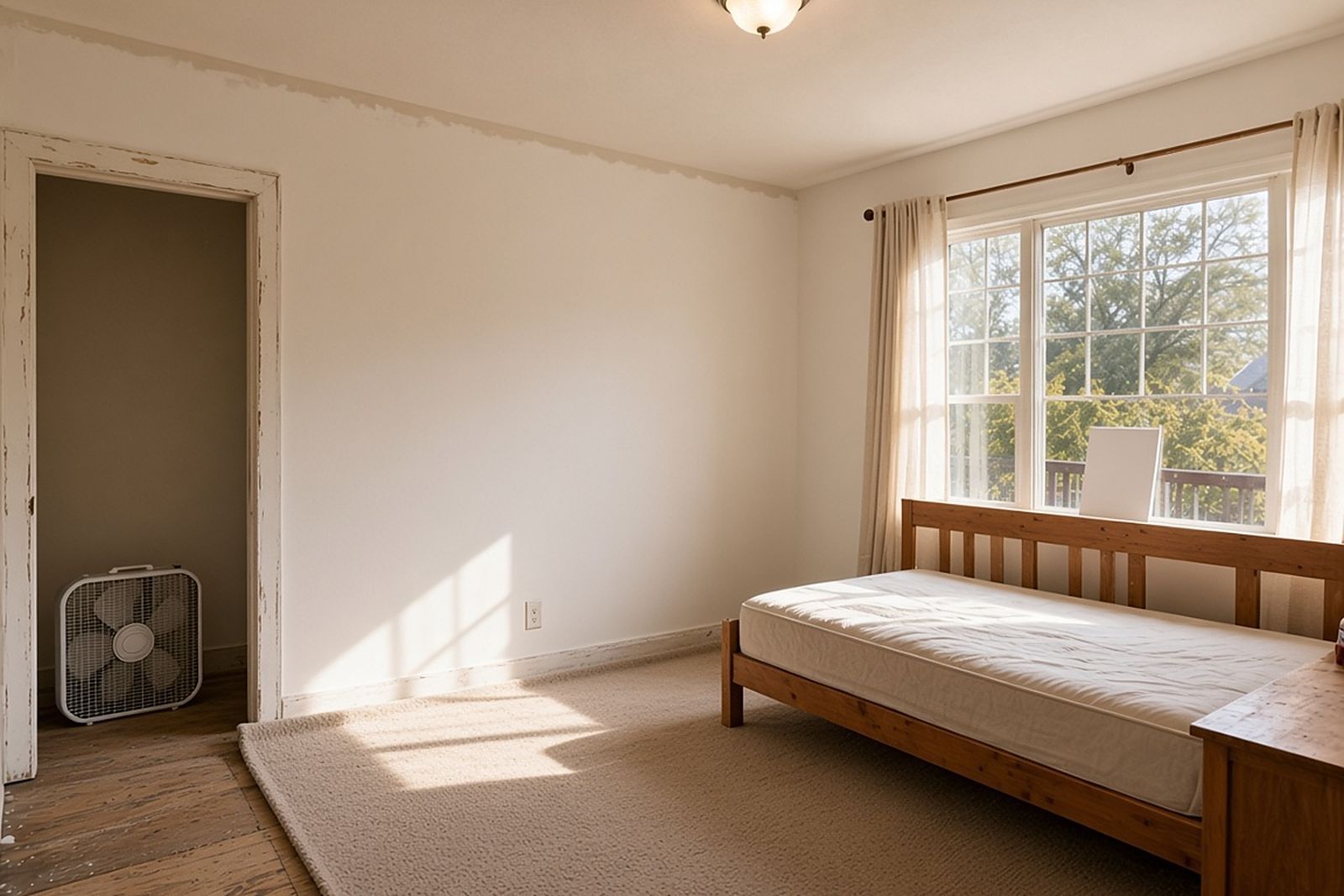
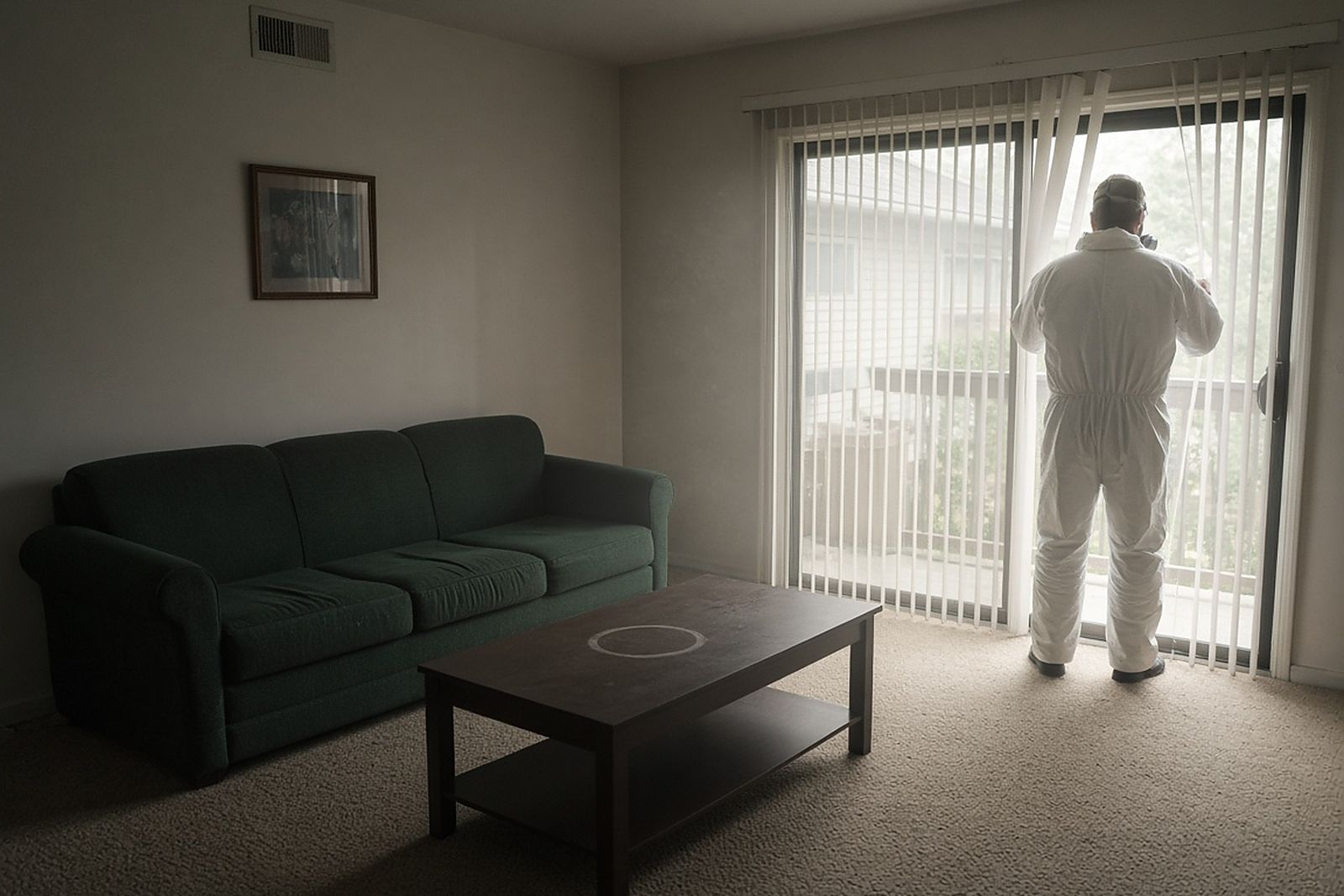
Before entering, the crew locks out the furnace at its disconnect and tags it. Wearing full-face respirators and chemical-resistant suits, they walk the lower unit first, noting the landing points by the window and rear door, the scorch marks on a rug and a fine white film on dark furniture.
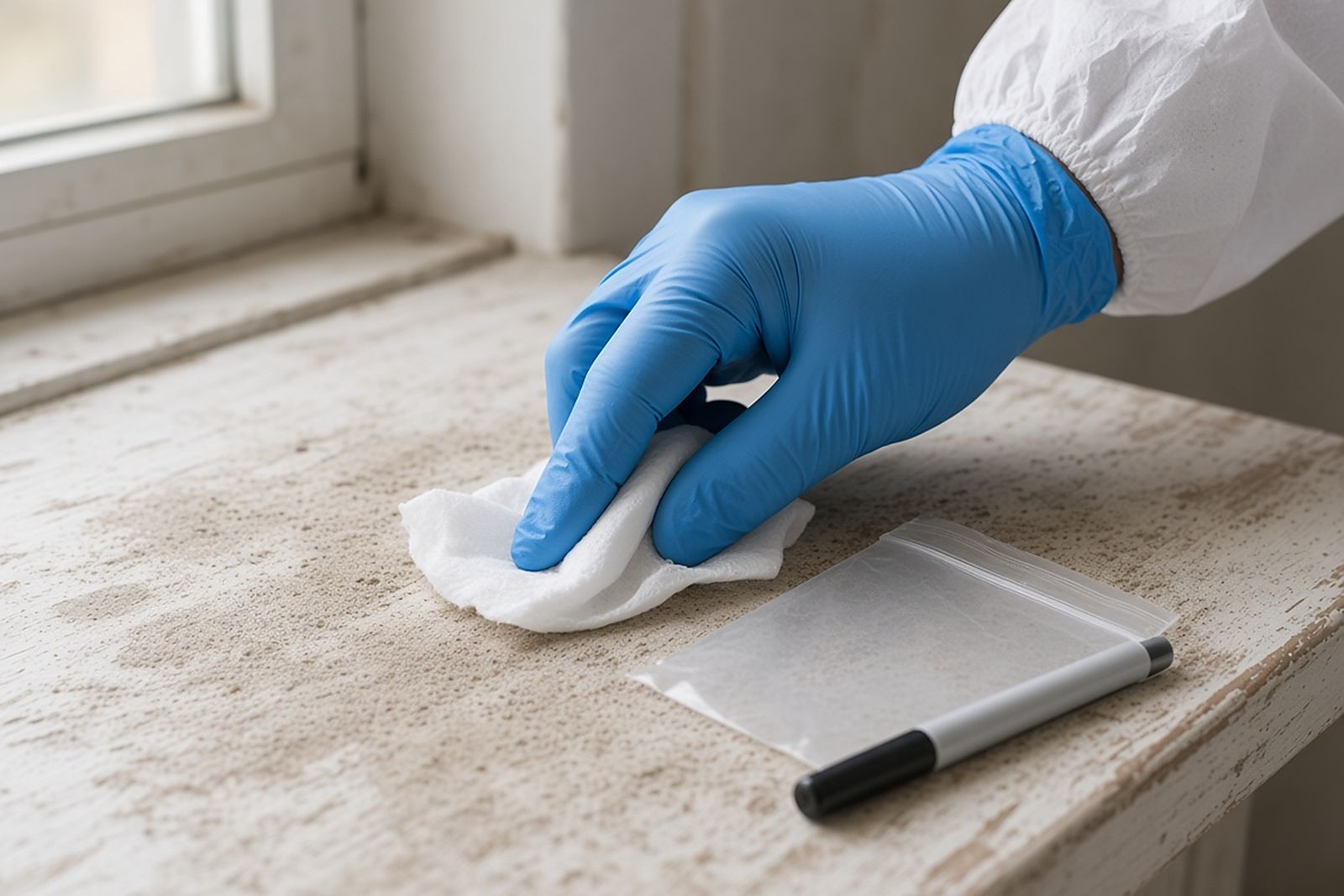
They then follow the air. The return grille for the lower unit sits in the hallway, a few steps from the rear door. The furnace pulled from there and pushed supply air into both units. In the neighboring unit, the crew finds light residue on window sills and bathroom surfaces near the supply registers and notes a mild stinging in the air of the upstairs bedrooms.
The basement laundry room, open to both units by stairs, has residue on the folded clothing on a table. The attic, sealed except for a small hatch, shows no signs of contamination and is left out of the scope with a written note explaining why.
A floor plan sketch marks each room as heavy, moderate, light or not affected. That rating system drives the rest of the plan and gives the owner a picture of the job at a glance.
How were soft goods sorted, and who decided?
The provider does not decide alone. They walk each unit with the owner, and later with the neighboring tenant, and propose a category for every soft item or group of items. The owner or tenant approves or disagrees, and the decision is recorded.
- Lower unit rug with scorch marks and heavy deposits: discard.
- Lower unit upholstered sofa and mattress near the landing points: discard, because residue in the foam cannot be reliably reached.
- Lower unit curtains and bedding: bag and send for off-site laundering, with a recommendation to discard if irritation persists after cleaning.
- Neighboring unit clothing, towels and bedding: launder in separate loads, using repeated cycles as needed.
- Neighboring unit carpet: deep extraction cleaning after HEPA vacuuming, with removal as a change trigger if irritation continues after treatment.
- Basement laundry room clothing: return to owners bagged, with laundering guidance.
- Open food, cosmetics and medications in the lower unit: discard, with pharmacy replacement guidance for prescriptions.
Why the order of work mattered
Tear gas residue can move from one place to another every time it is disturbed. A scope that cleans rooms in the wrong sequence can undo its own progress. The provider in the example commits to a specific order in writing.
The lower unit is sealed off at its connecting doors while it is worked on. The crew HEPA vacuums from the top down, starting with ceilings and light fixtures and ending with floors, then wet cleans hard surfaces with a mildly alkaline solution. Alkaline conditions help break CS down, so the crew favors that chemistry on surfaces that can tolerate it and spot tests finishes before use.
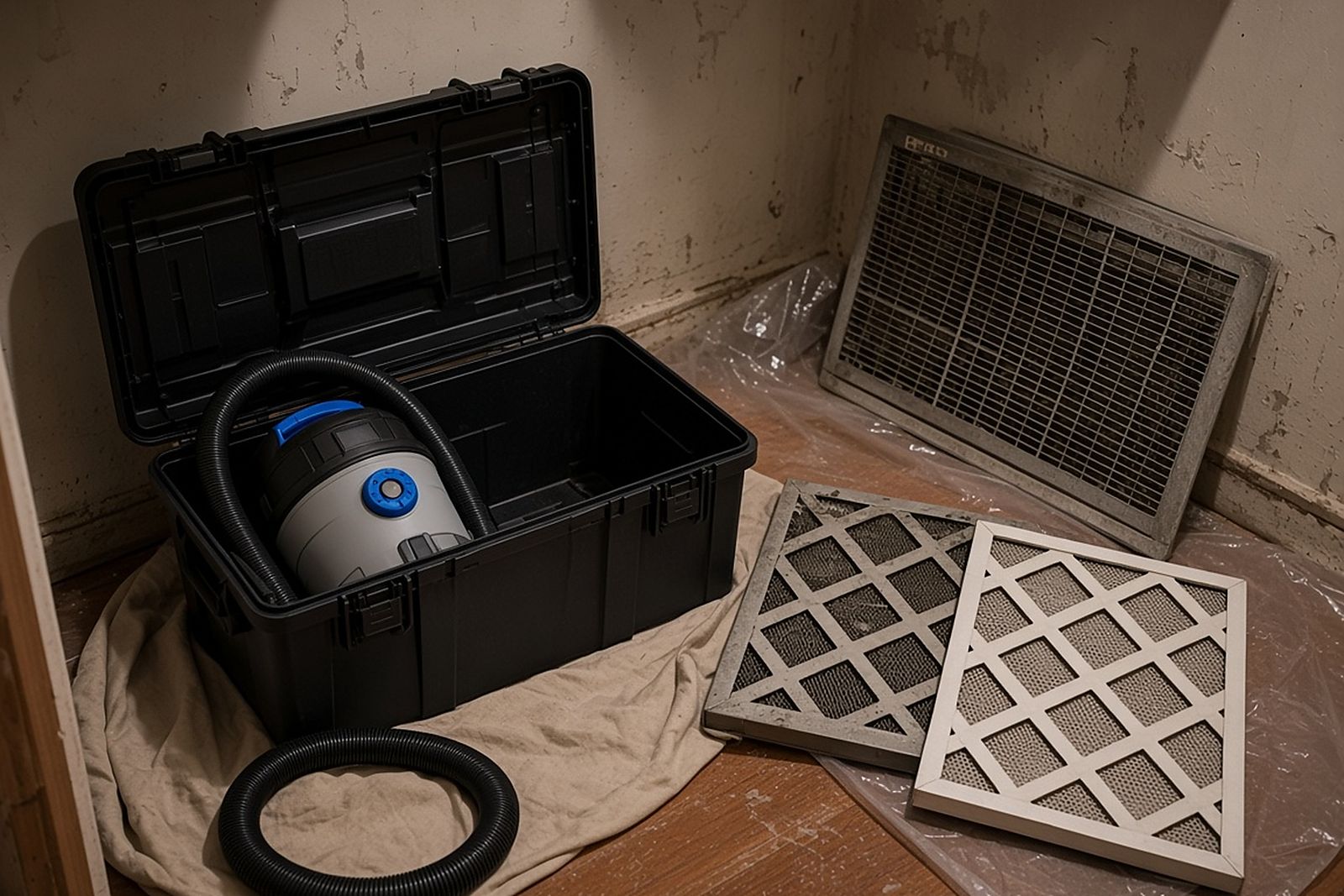
The ducts, registers, furnace blower compartment and filter are addressed after the heaviest room surfaces are clean but before the neighboring unit's final wipe-down. That way, anything knocked loose during duct work does not land on already finished rooms. The furnace remains locked out until the duct work is complete and the new filter is installed.
The neighboring unit is worked in the same top-down pattern, but only after the lower unit's heavy cleaning is complete, so crew members are not carrying residue on their suits from a heavy zone into a light one. The crew changes outer protective layers at a marked point between the units and bags the used layers before crossing.
Insurance and agency conversations
The owner notifies the property carrier the same day and sends the scope, sketch and photographs. The adjuster asks for the agency's release confirmation and the itemized soft goods list. The neighboring tenant contacts their renters carrier about clothing and furniture.
The owner also asks the city about any claim process for damage caused during police operations. Outcomes in cases like this can be disappointing. Westword reported in 2019 on a Greenwood Village, Colorado home damaged in a 2015 SWAT standoff using tear gas and explosives, where the city offered only a small payment toward the deductible and courts turned down further compensation.
The city's risk management office is the place to confirm what process applies and what deadline exists. In the example, the owner files within the city's window and proceeds with the cleanup rather than waiting for a decision, keeping all records in case the claim moves forward.
The adjuster also asks why the sofa was discarded rather than cleaned. Because the soft goods list already states the reason, residue in foam that cleaning cannot reliably reach, and includes photographs of the white film on the fabric, the question is answered with a document rather than a debate.
Verifying the job before tenants returned
After the duct work, the crew unlocks the furnace and runs it through a full heating cycle with all interior doors open. The crew lead and the owner then walk both units together, opening closets, sitting on retained furniture and running water in the bathrooms.
In the neighboring unit's upstairs hallway, the owner notices faint throat irritation near one supply register. The crew removes the register cover, finds residue on the boot and the first section of the duct beyond it and cleans both. A second walkthrough later that day finds no further irritation.
The closeout package includes the floor plan with ratings, before and after photographs, the soft goods decision list with signatures, the product names used on each surface type, a description of the HVAC work with photos of the blower compartment and the notes from both walkthroughs, including the fix at the hallway register.
How the people involved coped
Buildings are only part of the story. The neighboring tenant, who had no connection to the standoff, lost clothing and spent several nights elsewhere. The owner arranged temporary lodging and checked in daily, which made the process easier for everyone.
Health effects deserve attention too. The owner in this example encourages both households to see a medical provider if symptoms linger and to talk with someone if the experience is weighing on them. Stinging eyes and a disrupted home can be stressful even for people who were nowhere near the standoff itself.
What to look for in your own provider's plan
Look for the same building blocks: deployment facts gathered from the agency, an air path traced through the building, a soft goods list with a stated reason for each decision, a written order of work, clear HVAC steps and a walkthrough under normal operation. If a proposal lacks one of these, ask about it.
A provider confident in their approach will explain each step in plain language. That explanation is often the best early sign that the finished job will hold up.
Finally, pay attention to how a provider handles uncertainty. In the example, the carpet removal trigger and the register fix show a plan that expects surprises and knows what to do about them.