Short answer
After tear gas enters your home or business, get everyone out and into fresh air, seek medical care for anyone with severe symptoms, and wait until the scene is released before going back in. Keep the HVAC system off, keep doors closed, avoid touching or laundering contaminated items, document the damage from doorways, and gather incident details for the cleanup provider, your insurer and the responding agency.
People first: fresh air and medical care
Move everyone, including pets, out of the affected space and into fresh air as quickly and calmly as possible. Stand upwind if you can. Remove contaminated outer clothing and place it in a plastic bag if one is available.
Most people feel intense burning in the eyes, nose, throat and skin, along with coughing and tearing. Rinse eyes with clean water and wash exposed skin with soap and cool water. Avoid rubbing your eyes, and remove contact lenses if you wear them.
Watch for signs that someone needs medical care right away, such as trouble breathing, chest pain, wheezing that does not ease, severe eye pain or confusion. Call 911 for those symptoms. People with asthma, heart or lung conditions, infants, older adults and pregnant people may be more vulnerable.
Serious effects are uncommon but real. A 2017 systematic review in BMC Public Health reported that of 9,261 documented tear gas and pepper spray injuries, 8.7% were severe enough to require professional medical management and 17% were moderate. If you are unsure, it is better to get checked.
When can you go back inside?
If police deployed the gas during an active incident, the scene is theirs until they release it. Do not re-enter until officers tell you it is permitted. Ask for an incident or report number and the name of the agency.
Even after release, short visits can be uncomfortable or harmful. Residue settles on floors, furniture, fabrics and inside ducts, and it lifts back into the air whenever it is disturbed. If you must go in for medications, documents or a pet's needs, make it quick, touch as little as possible and bag what you bring out.
If the home is not livable, arrange to stay elsewhere. Keep receipts for lodging, meals and replacement essentials, since you may be able to seek reimbursement later.
If you rent, tell your landlord in writing as soon as you can. They will need to know about damage to the building and may have their own insurance and contractor contacts.
Keep the HVAC off and skip the quick fixes
If the HVAC system is running, it pulls residue into the return ducts and spreads it to rooms the gas never reached. Once it is in the ducts, every cycle can push a fresh portion back into the living space.
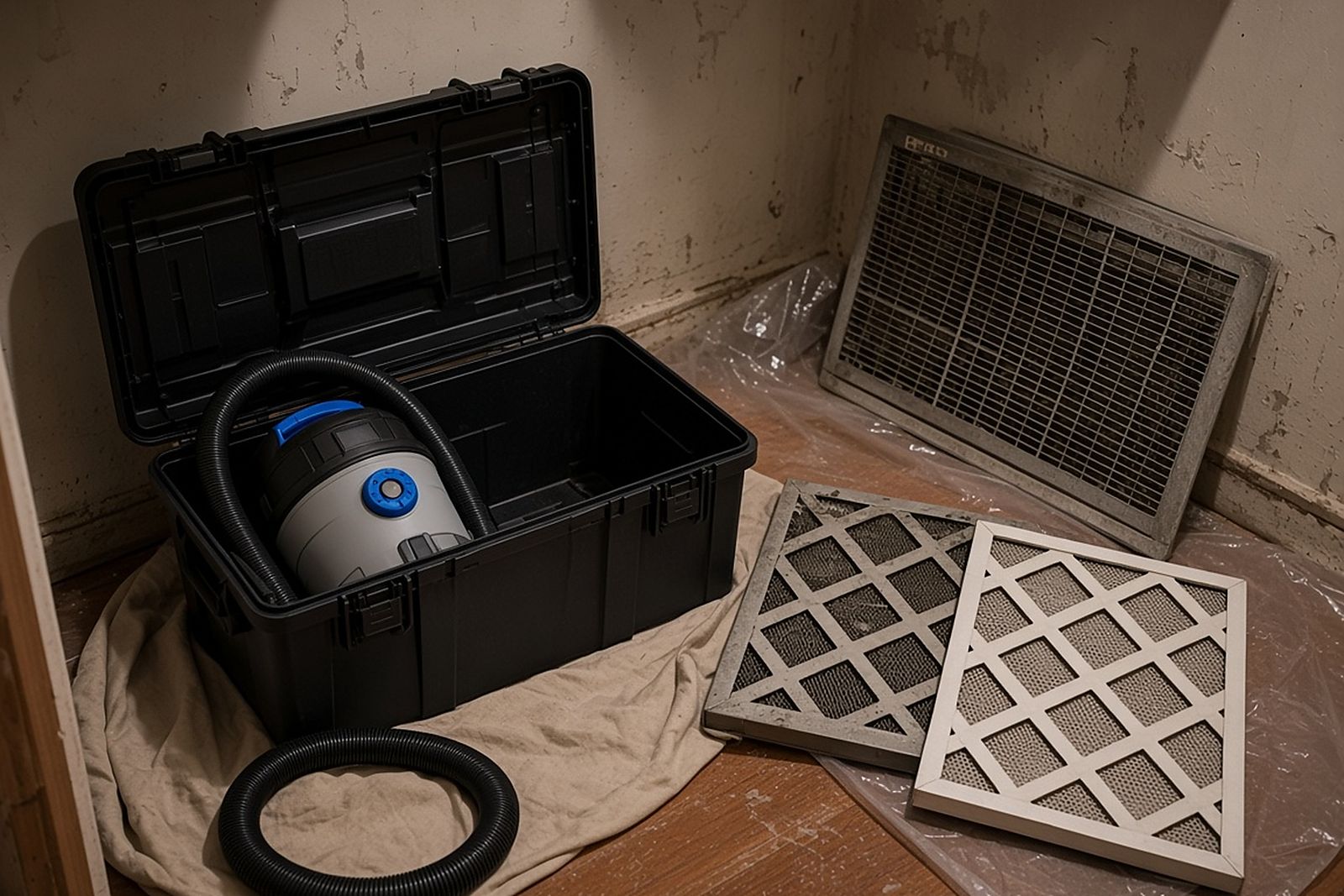
Turn the system off at the thermostat as soon as it is safe to do so. If you can reach the breaker or disconnect without walking through heavily contaminated rooms, that is even better. Leave the filter in place for the cleanup crew to remove and bag. Pulling it out yourself can shake loose the residue it captured.
If the building has a bathroom or kitchen exhaust fan that vents outside, leave it off as well until the provider has looked at the space. Exhaust fans can draw air, and residue, from other rooms toward them.
In extreme heat or cold, ask the provider about temporary options. Portable heaters or window units that do not draw air through the ducts can sometimes bridge the gap, but only in rooms that are not heavily affected.
Many common instincts can make tear gas residue harder to remove or spread it further.
- Do not run fans or open every window and door to air the house out; that can move residue into clean rooms and neighboring units.
- Do not vacuum with a household vacuum, which can blow fine particles back into the air.
- Do not wash contaminated clothing, bedding or towels in your home washer with other laundry.
- Do not wipe surfaces with hot water or household cleaners before the provider advises, since the wrong method can smear residue or cause new irritation.
- Do not throw away furniture, mattresses or other items before photographing and listing them.
- Do not paint over walls or ceilings.
Document the damage and prepare for the provider's questions
Documentation matters for the cleanup plan, your insurer and any claim against the agency that deployed the gas. Take photographs from doorways or through windows of each affected room, canister impacts, broken windows or doors, visible powder on surfaces and any items you think are ruined.
Write down the date and time of the event, the agency involved, the incident number, which rooms were affected and whether the HVAC system was running. Note any symptoms household members had, when they started and whether anyone sought medical care.
Ask the agency, if you can, which agent was used, how many canisters or rounds entered the building and where they landed. The difference between CS powder and OC oil changes the cleaning approach. If the agency will not tell you, note that too.
Many jurisdictions have short deadlines for notices of claim against a government agency. Ask the agency's claims or risk management office what its deadline is, and consider talking with an attorney early.
When you call a tear gas residue cleanup provider, expect questions about the type of agent, the number of rooms affected, the kinds of flooring and furniture present, whether the HVAC system ran and whether the scene has been released.
They may also ask about access: whether doors can be locked, whether windows are broken, whether a landlord or building manager needs to approve entry and where they can park. Share photographs if they ask, so they can bring the right equipment and crew size.
Ask what their first visit will include, whether they will provide a written scope before starting major work and how they judge when the home is ready for re-entry.
Be cautious with any company that guarantees a same-day return to normal or suggests that a fragrance treatment will solve the problem. Masking the smell does nothing about the residue that causes irritation.
When the deployment happened next door
Many households are hit by a standoff at a neighboring address rather than their own. Gas drifts through an open kitchen window or a shared wall, and the family may be away when it happens and return to a taped-off street.
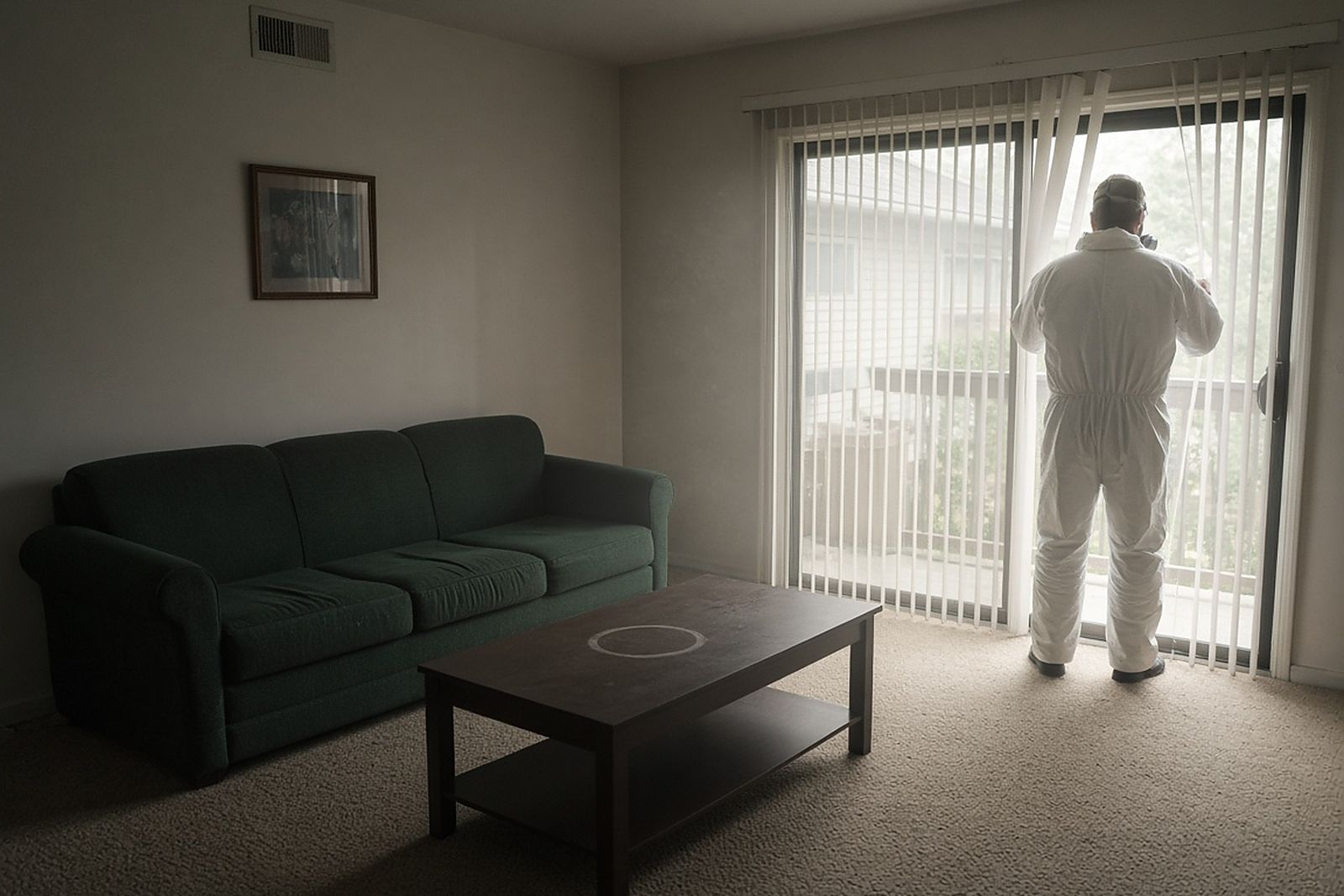
When you are allowed back and your eyes burn the moment you open the door, step back out. If the thermostat or hallway panel is within reach, turn the system off, photograph what you can from the doorway and close the door again. Ask the officer for the incident number and which agent was used.
Then stay elsewhere, call your insurer and contact a residue cleanup provider. Share your photographs and tell them whether the air conditioning or heat was running while you were away, so they plan to inspect the ductwork as well as the rooms that were directly exposed.
That detail about the system matters more than it seems. Without it, a provider might focus only on the kitchen and living room and miss residue carried into the bedrooms through the supply ducts. Turning off the system, documenting from a distance and stepping away all limit the spread before professionals arrive.
Businesses and apartment buildings
In a business, close the affected area to staff and customers, post a notice and redirect foot traffic. Shared HVAC systems and rooftop units can move residue between suites, so notify the building manager and neighboring tenants.
In an apartment building, tell the property manager right away. Hallways, stairwells and shared ventilation may need cleaning before individual units can be finished, and other residents may be affected.
Businesses face extra pressure to reopen quickly. Resist the urge to let staff back in after a quick wipe-down. Employees who spend a full shift in a space with lingering residue may develop symptoms, and customers may leave with irritated eyes and a poor impression. A short, planned closure is usually less costly than reopening twice.
Keep a list of inventory, equipment and supplies that were in the affected area. Food, open packaging, fabrics and anything that touches skin may need special handling or disposal, and your insurer will want a record.
Taking care of yourself afterward
A police deployment near your home can leave you rattled, even if you had nothing to do with it. It is normal to feel shaken, angry or anxious for a while afterward.
Follow up with a doctor if physical symptoms such as coughing, skin irritation or eye discomfort continue. Talking with someone you trust, or with a counselor, can help with the stress, and it is a reasonable part of recovering alongside the physical cleanup.