Short answer
CS and OC residue behave the same way in a house and a business, but the cleanup plan does not look the same. Homes usually involve bedding, clothing, a single furnace and a displaced family. Businesses add rooftop or multi-zone HVAC, inventory, employee safety duties, food-contact rules and pressure to reopen. A good provider adapts the order of work and the documentation to the setting.
Where the residue ends up: homes versus businesses
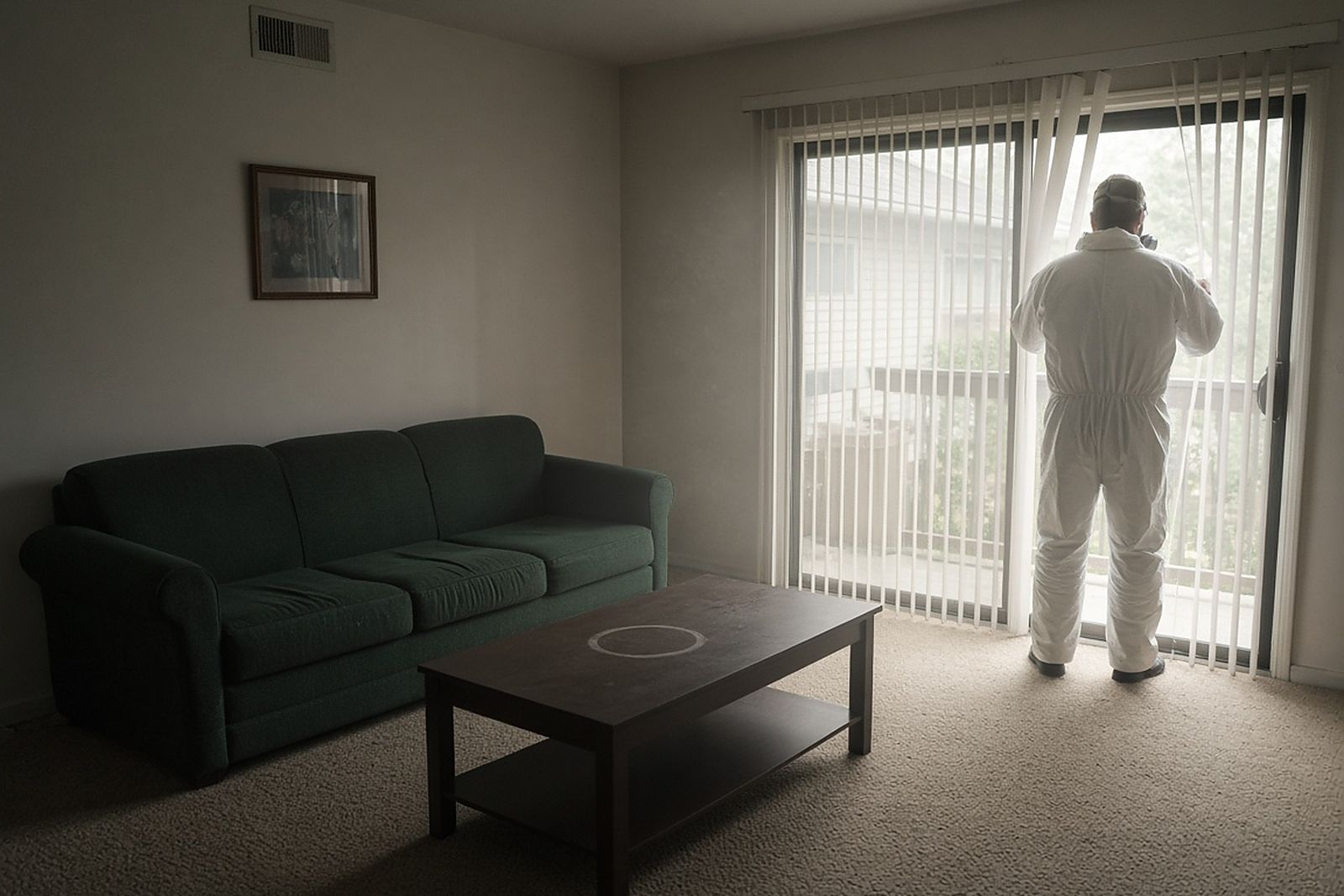
Residential exposure is most often tied to police activity at a specific address, such as a standoff or a high-risk warrant service. Canisters or projectiles are fired into a house or apartment, and the residue is concentrated inside one dwelling with some spread to neighbors.
Commercial exposure often comes from outside. Storefronts, restaurants, offices and lobbies near protests or crowd-control operations can take in gas through open doors, broken windows or outdoor air intakes. Amnesty International recorded 89 uses of tear gas in 34 states between May 26 and June 5, 2020, in its 2020 report on protest policing, a period when many downtown businesses dealt with this kind of intrusion.
The source matters because it shapes the residue pattern. An interior deployment tends to leave heavy deposits near the landing points and lighter residue elsewhere. An exterior intrusion tends to spread a thinner layer across entry areas and whatever the ventilation system pulled inside.
Commercial HVAC changes the scope
A typical house has one furnace or air handler, a filter slot and ducts running to each room. That system can often be locked out, inspected and cleaned in a day as part of a broader job.
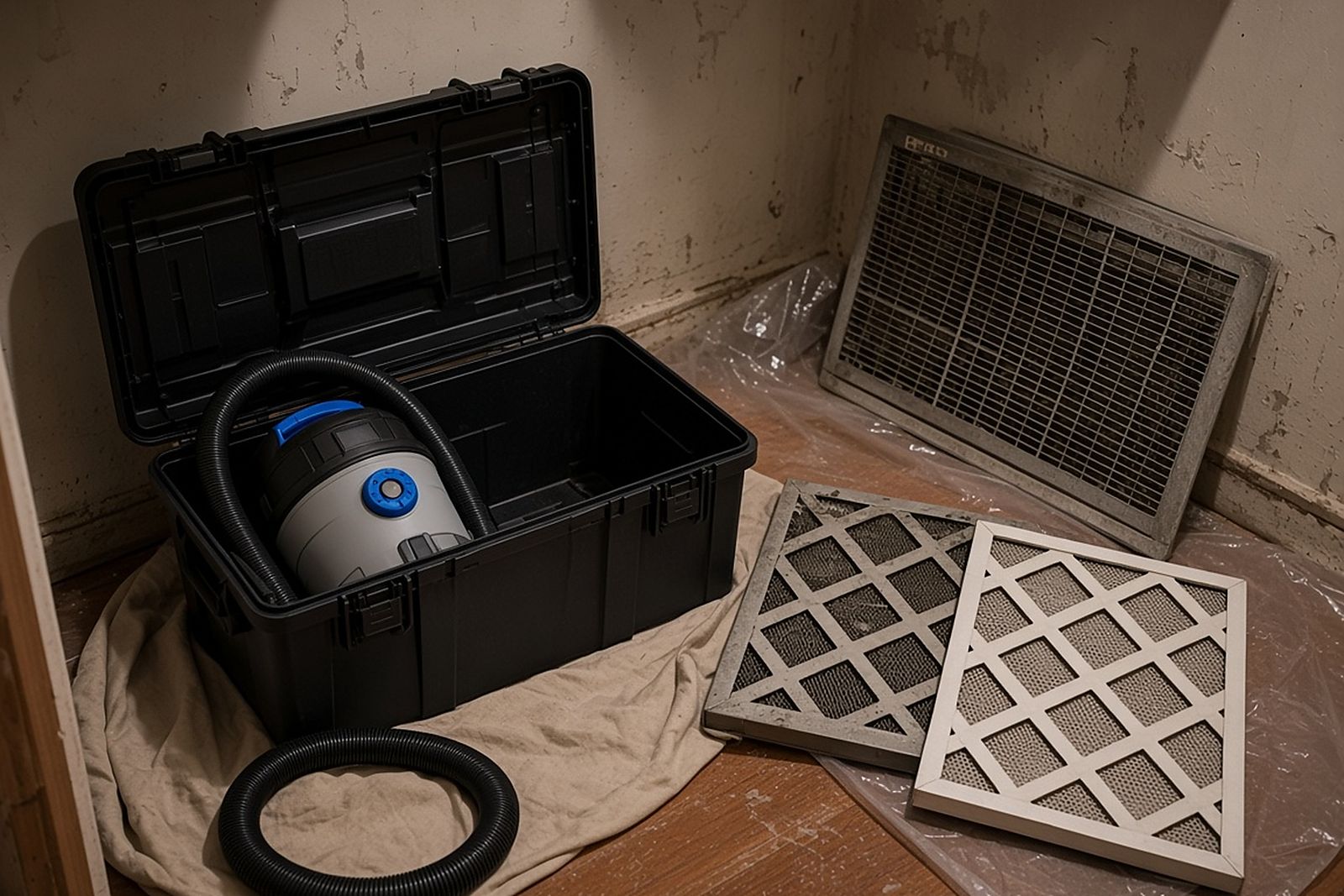
Commercial buildings are more complicated. Rooftop units, multiple zones, variable air volume boxes, economizers that bring in outside air, return plenums above drop ceilings and kitchen exhaust hoods all create additional paths and surfaces where residue can settle. A single office floor may share air with other tenants.
A commercial scope should identify each unit and zone that could have carried residue, state which were running during the event and describe how each will be inspected and cleaned. Ceiling tiles in a return plenum are a common reservoir and may need replacement. Building engineers or a mechanical contractor often need to work alongside the remediation crew.
Accessible duct runs in a house can usually be reached through registers and the air handler. In a commercial space, some ducts sit above hard ceilings or inside shafts, and the scope should say plainly which sections the crew can reach and which will be evaluated by other means.
Inventory, stock and business contents
In a home, soft goods decisions revolve around clothing, bedding, upholstery, curtains and personal items. Those decisions are emotional as well as practical, and a provider should give the family time to decide what to keep.
In a business, the questions revolve around stock and equipment. A clothing retailer may have racks of garments that absorbed residue. A restaurant has open food, linens and porous prep surfaces. An office has fabric chairs, cubicle panels and paper records.
- Packaged goods in sealed, non-porous packaging can often be wiped and kept.
- Open food, ingredients and anything in porous packaging that was exposed is generally discarded.
- Garments and textiles for sale may be laundered, professionally cleaned or written off, and the business should confirm with its insurer before choosing.
- Fabric seating and cubicle panels are cleaned when residue is light and replaced when irritation persists after cleaning.
- Electronics are wiped externally, and the provider should explain any concern about residue drawn into cooling fans.
- Paper records are handled carefully to avoid spreading dust, and important documents may be copied and the originals bagged.
What additional responsibilities does a business owner have?
An employer is responsible for protecting workers from recognized hazards. CS is an established workplace hazard with published exposure limits.
In practical terms, that means staff should not be sent in to clean up after a deployment unless they are trained and equipped for chemical exposure. It also means the business should hold off on normal operations until the space has been cleaned and checked, and it should listen closely to employees who report irritation after reopening.
Food businesses and some regulated facilities may need to satisfy their health department or licensing agency before reopening. Call the food program at your county or city health department, or your licensing agency, and ask whether an inspection or notice is required for your type of business before you reopen.
Timing pressure in each setting
Families want to get home, and that urgency is real, but homes can usually stay closed for as long as the work requires. The main scheduling question is where the household will stay in the meantime.
Businesses feel lost revenue every day they are closed, which creates pressure to reopen quickly. A provider can help by phasing the work, for example by cleaning and releasing the sales floor while the back office and duct work continue, or by working overnight.
What should not change is the order of operations. HEPA vacuuming before wet cleaning, HVAC lockout until ducts are addressed and a walkthrough with the system running should happen in both settings. Reopening before those steps are complete risks recontaminating clean areas and exposing staff and customers.
If you are a business owner, ask the provider to show you a phased plan on a floor sketch, with each zone's release condition written beside it. That single page makes it easier to explain the reopening timeline to staff, customers and your landlord.
One street, two properties: an illustrative case
This illustrative case uses a made-up block with a coffee shop on the ground floor and an apartment above it. During an evening protest, CS canisters land in the street. The coffee shop's door is propped open, and its rooftop unit's outside air damper is open. Upstairs, a tenant has a window cracked in the bedroom.
In the coffee shop, the provider finds a thin film across the front counter, pastry case, menu board and seating area, heavier near the door. The rooftop unit pulled contaminated outside air through its economizer. The scope includes discarding open food and cups, laundering aprons and towels, cleaning the pastry case and espresso machine exterior, cleaning the rooftop unit's intake and coil area, replacing filters and HEPA vacuuming and washing the dining area. The owner reopens after a walkthrough and a food-safety check.
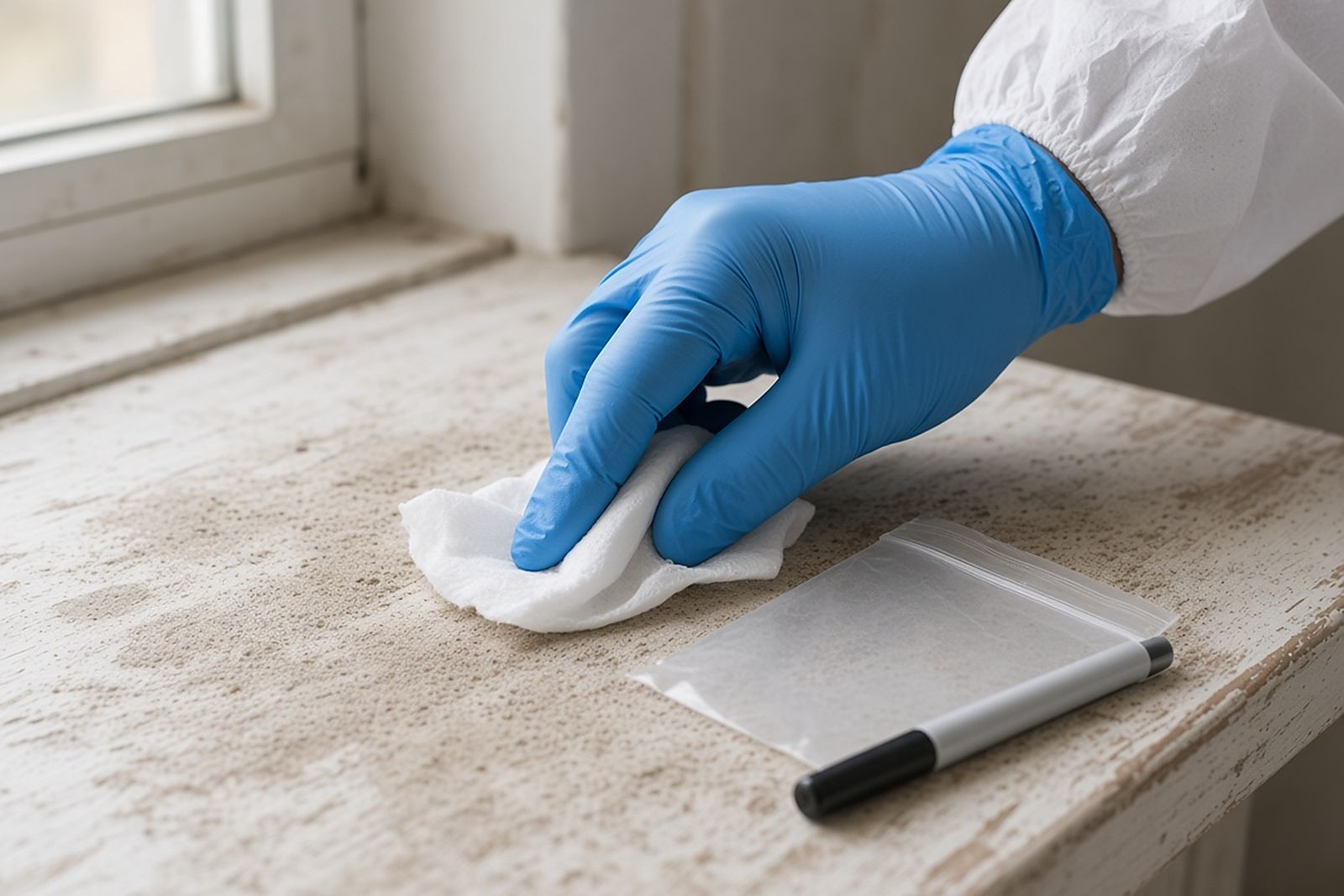
Upstairs, the residue is limited to the bedroom near the open window. The provider HEPA vacuums and washes surfaces, sends bedding and curtains for laundering and cleans the window sill and screen. The apartment's own small heating unit was off, so ducts are inspected but need only a light cleaning.
The chemistry is the same in both places. The coffee shop's job is larger because of its food rules, its larger air system and its open door. None of these specifics come from a real job, but they are typical of how setting drives scope.
Paperwork for households and businesses
A household typically works with a homeowners or renters policy. A business may involve a commercial property policy, business interruption coverage, a landlord's policy for the building and possibly workers' compensation if employees were affected. Each carrier may want different records.
In both settings, the core records are the same: the agency's release confirmation if applicable, photographs, the written scope, the soft goods or inventory decision list, product information and closeout notes. Businesses should also keep records of lost operating days and any discarded stock, since those may be relevant to a business interruption claim.
No provider can promise insurance payment. Ask your carrier early what they need, and make sure your provider knows before work begins.
How do you communicate with occupants in each setting?
In a home, communication is personal. The provider talks with the household, explains what will be kept or discarded and answers questions about pets, children and anyone with asthma or other breathing concerns. Neighbors who share walls or a building may need a short update as well.
In a business, many more people need information: employees, customers, the landlord, neighboring tenants and sometimes a regulator. A short written notice works best. State that a chemical irritant entered the premises, that a professional crew is cleaning it, when the business expects to reopen and who employees should contact if they have symptoms. Avoid commenting on the events that led to the deployment.
After reopening in either setting, invite people to report any stinging, coughing or peppery smell. A few reports clustered near one vent or one piece of furniture are a valuable signal. Pass them to the provider promptly rather than waiting to see whether the problem fades.
What to look for in a provider for each setting
For a home, look for a provider who explains soft goods decisions patiently, handles personal belongings with care and can coordinate with a landlord or insurer so you are not managing every call yourself.
For a business, look for a provider who can read a mechanical plan or work with your building engineer, schedule around operations, phase the work safely and produce documentation that fits a commercial claim and any regulator's expectations.
In either case, ask how they plan for the specific agent, whether they expect CS powder, oily OC or both, and how they will confirm the space is ready. A confident, specific answer is more reassuring than a promise that everything will be gone.